Indonesia has an established semiconductor-related manufacturing base, including silicon wafer production and semiconductor back-end operations. Infineon identifies a manufacturing site in Batam, UTAC lists a facility in Karawang, and SUMCO reports silicon wafer manufacturing in Bekasi.
Indonesia also wants to develop chip design and other parts of the semiconductor supply chain. On January 30, 2026, the Ministry of Industry published a roadmap covering materials, chip design, front-end fabrication, and back-end manufacturing.
For foreign investors, these activities call for different investment plans. A company manufacturing silicon wafers needs different equipment and facilities from a chip design business or a semiconductor assembly and testing operation.
Key Takeaways
- Indonesia has company-documented semiconductor manufacturing facilities in Batam and West Java. Jakarta also has businesses advertising electronics and chipset-related design capabilities.
- On January 30, 2026, the Ministry of Industry cited BPS figures showing US$4.87 billion in semiconductor imports during January to November 2025.
- Infineon identifies its Batam operation as a semiconductor back-end manufacturing site. UTAC lists its Indonesian manufacturing facility in Karawang, while SUMCO reports silicon wafer manufacturing in Bekasi.
- Silicon wafer manufacturing, integrated circuit fabrication, chip design, and outsourced semiconductor assembly and testing are different industrial activities.
- Foreign investors should establish their exact business scope before reviewing company registration, KBLI classification, OSS licensing, and industrial site requirements.
Where Indonesia Participates in the Semiconductor Supply Chain
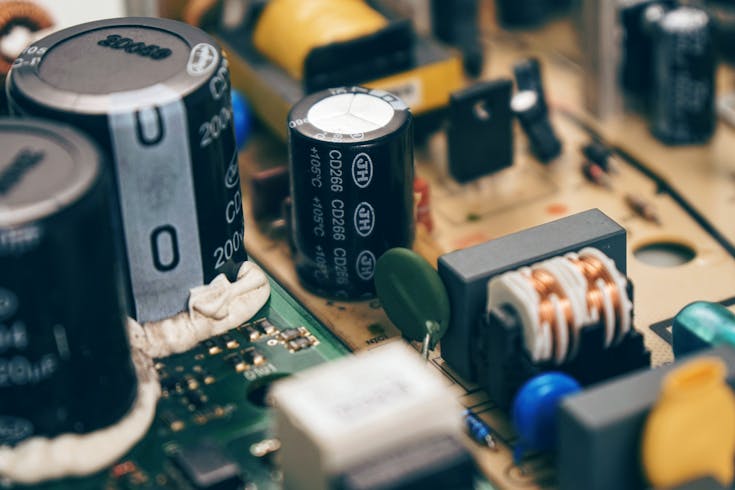
Semiconductor manufacturing covers several production stages. Each stage requires its own technical capabilities, machinery, workforce, and quality-control processes.
The Ministry of Industry’s January 2026 roadmap identifies four development pillars: semiconductor materials, chip design, front-end fabrication, and back-end assembly, testing, and packaging.
The roadmap describes Indonesia’s industrial development objectives. It does not establish that every stage already has commercial production capacity in the country.
Semiconductor Materials and Silicon Wafers
Silicon wafers provide the substrate used in many semiconductor manufacturing processes. Manufacturers prepare these wafers to meet specifications for purity, dimensions, and surface quality.
PT SUMCO Indonesia is a documented example of Indonesia’s participation in this part of the supply chain.
SUMCO Corporation’s 2025 site data identifies the Indonesian company’s scope as the design, development, and manufacture of silicon wafers.
Manufacturing silicon wafers is distinct from fabricating integrated circuits on those wafers. A wafer manufacturer prepares the substrate. A chip fabrication facility forms electronic circuits through subsequent manufacturing processes.
Investors examining upstream materials should establish whether the proposed product can meet semiconductor-grade specifications. The availability of a raw mineral resource does not establish its suitability for commercial semiconductor production.
Chip Design and Engineering
Chip design involves developing the circuits and architecture used in semiconductor devices before fabrication.
Depending on the project, engineering work can include circuit design, signal processing, embedded systems, verification, and intellectual property development.
The Ministry of Industry has identified chip design and workforce development as early priorities for Indonesia’s semiconductor development.
Its January 2026 announcement also describes the Indonesia Chip Design Collaborative Center (ICDEC), involving the ministry, PT Hartono Istana Teknologi (Polytron), and university experts.
The initiative forms part of the government’s effort to develop design capabilities. The announcement does not, by itself, establish the number of commercial chip designs completed or manufactured through the program.
Front-End Semiconductor Fabrication
Front-end fabrication forms integrated circuits on semiconductor wafers. The process requires specialized equipment, controlled manufacturing environments, suitable utilities, and established production technology.
The sources reviewed for this article did not establish an operating commercial front-end integrated circuit foundry among the Indonesian companies profiled below.
This is a limitation of the reviewed evidence. It should not be interpreted as proof that no such facility exists anywhere in Indonesia.
A silicon wafer manufacturing site, a chip design office, and an announced industrial park investment are different from an operating integrated circuit fabrication line.
For a proposed fabrication project, investors should request technical documentation, evidence of equipment installation, commissioning records, and information about the intended manufacturing process.
Semiconductor Assembly, Testing and Packaging
Back-end manufacturing takes place after wafer fabrication. Depending on the product, it can involve die attachment, interconnection, packaging, and electrical testing.
Infineon has identified its Batam facility as a semiconductor back-end manufacturing site.
UTAC, an outsourced semiconductor assembly and test group, also lists an Indonesian manufacturing facility in Karawang.
These company records establish a basis for investigating Indonesia’s back-end manufacturing capabilities. They do not provide a complete inventory of the production processes available at every facility.
| Value Chain Stage | Main Activity | Indonesian Evidence | Investor Consideration |
|---|---|---|---|
| Materials and silicon wafers | Manufacturing substrates and materials used in subsequent semiconductor processes | SUMCO reports silicon wafer manufacturing in Bekasi. | Material specifications, processing equipment, utilities, and customer qualification |
| Chip design | Developing circuits, architecture, and related intellectual property | The Ministry of Industry reports the ICDEC initiative. | Engineering capability, IP ownership, and fabrication partnerships |
| Front-end fabrication | Forming integrated circuits on semiconductor wafers | Included in the government roadmap. The reviewed company sample does not establish an operating commercial IC foundry. | Financing, technology, utility capacity, equipment installation, and commissioning |
| Back-end manufacturing | Semiconductor assembly, testing, and packaging | Infineon Batam and UTAC’s Indonesian manufacturing site | Site-specific processes, quality requirements, and customer approval |
Also read: Major Industries in Indonesia (Based on Contribution to GDP)
What the Latest Official Semiconductor Data Shows
Indonesia’s Ministry of Industry has published semiconductor import figures and a national industry roadmap. Together, these provide a starting point for market research.
The available figures have limits. The reported import value does not establish the revenue of domestic semiconductor manufacturers or the size of a specific product market.
Indonesia’s Reported Semiconductor Imports
In a statement published on January 30, 2026, the Ministry of Industry cited BPS figures showing US$4.87 billion in semiconductor imports for January to November 2025.
The ministry also reported US$2.33 billion in semiconductor imports for the full 2020 calendar year.
Official Semiconductor Import Data
2020: US$2.33 billion, full calendar year.
2025: US$4.87 billion, January to November.
Source: Ministry of Industry, January 30, 2026, citing Statistics Indonesia (BPS). The ministry’s statement does not provide the detailed HS-code breakdown used to reproduce these figures.
The two observations cover different reporting periods. They should not be used to calculate a like-for-like annual growth rate.
The figures also cannot establish how much semiconductor demand an Indonesian manufacturer could capture. A supplier needs product-level demand, customer specifications, and evidence that buyers can qualify its proposed production process.
Investors should obtain the underlying BPS trade classifications before using these import figures in a detailed market-size or import-substitution model.
Indonesia’s Semiconductor Roadmap
The Ministry of Industry’s January 2026 statement describes a roadmap covering semiconductor materials, design, front-end fabrication, and back-end manufacturing.
The ministry places particular emphasis on chip design, intellectual property development, and human resources during the early development stage.
These priorities may help foreign companies identify areas for technical cooperation or engineering partnerships.
Any specific incentive, procurement opportunity, or government-supported project still needs separate verification. The roadmap does not establish that a proposed company automatically qualifies for financial or regulatory support.
Semiconductor Companies in Indonesia and Their Documented Activities
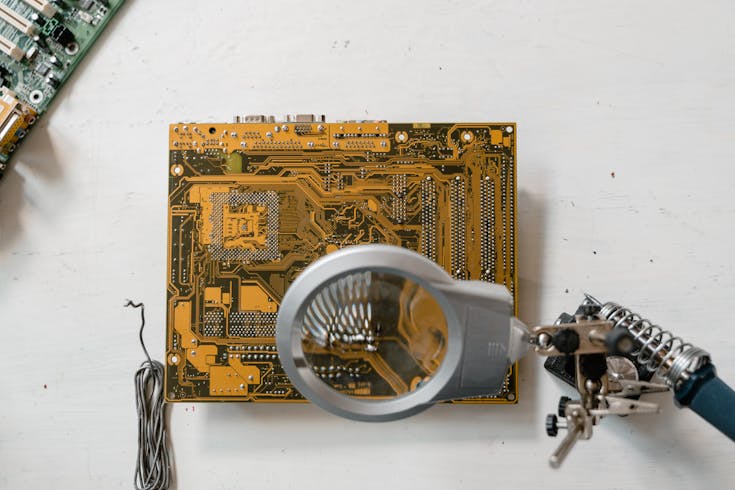
Company records identify several semiconductor-related manufacturing operations in Indonesia. The examples below cover different stages of production and should not be treated as interchangeable manufacturers.
Company Selection Method
We selected companies using official corporate information that identifies an Indonesian presence and describes a relevant activity.
For manufacturing companies, we looked for a named Indonesian facility and a declared manufacturing function. We also checked whether the available source described the Indonesian site or the multinational group’s capabilities more broadly.
This desk review examined official company statements and government publications accessed by September 24, 2026.
It did not include site visits, independent production audits, or verification of current output, utilization, or customer qualifications.
The table is a selected company sample, not a national census of semiconductor businesses. A company’s listing establishes what its published records report. It does not independently confirm the operating condition of every production line on the review date.
| Company | Indonesian Location | Company-Documented Activity | Evidence | What Investors Should Check |
|---|---|---|---|---|
| PT Infineon Technologies Batam | Batam, Riau Islands | Semiconductor back-end manufacturing | Infineon’s corporate information identifies an existing Batam back-end facility. Its April 2022 announcement describes an expansion plan. | Current production scope, supplier qualification, and expansion commissioning status |
| PT UTAC Manufacturing Services Indonesia | Karawang International Industrial City, West Java | Indonesian manufacturing site within UTAC’s semiconductor assembly and test group | UTAC’s official manufacturing-site directory identifies the Indonesian facility at KIIC Karawang. | Product and process capabilities available specifically at the Karawang site |
| PT SUMCO Indonesia | MM2100 Industrial Town, Cikarang Barat, Bekasi, West Java | Design, development, and manufacture of silicon wafers | SUMCO Corporation’s 2025 site data and principal group companies directory | Wafer specifications, customer requirements, and process-specific supplier qualification |
Infineon Technologies Batam
Infineon identifies PT Infineon Technologies Batam as a semiconductor back-end manufacturing site within Batamindo Industrial Park.
On April 12, 2022, Infineon announced plans to expand its existing operation through premises acquired from PT Unisem.
The announcement described additional assembly and testing capacity for automotive semiconductor products. At the time, Infineon expected production from the expansion to begin in 2024.
That historical production target does not independently establish the expansion’s commissioning status, actual output, or utilization in September 2026.
Investors interested in the facility should request more recent operational information where it is material to a proposed supply or investment arrangement.
Also read: Complete List of Industrial Parks for Semiconductors in Indonesia
UTAC Manufacturing Services Indonesia
UTAC lists PT UTAC Manufacturing Services Indonesia under the manufacturing-sites section of its official corporate directory.
The listed address is Jl. Maligi I Lot A1-4, Karawang International Industrial City, West Java.
UTAC operates in the outsourced semiconductor assembly and test industry. However, its corporate site listing does not establish that every service advertised by the group is available at Karawang.
A prospective customer or supplier should confirm the facility’s specific package types, test capabilities, technical requirements, and procurement arrangements directly.
SUMCO Indonesia
SUMCO Corporation’s 2025 site data identifies PT SUMCO Indonesia as a business engaged in the design, development, and manufacture of silicon wafers.
Its corporate directory lists the Indonesian company at MM2100 Industrial Town, Cikarang Barat, Bekasi.
SUMCO belongs in the semiconductor substrate and materials segment. Its Indonesian wafer manufacturing activity should not be classified as outsourced semiconductor assembly and testing.
The published site data also does not establish that SUMCO operates a front-end integrated circuit foundry in Indonesia.
Notes from InvestinAsia Consultants
When preparing a supplier shortlist, ask for the Indonesian legal entity name, the exact facility address, and a site-specific list of products or processes. A multinational group’s global product catalogue may cover capabilities that its Indonesian facility does not offer. Establish the local scope before making commitments based on the group’s overall portfolio.
Other Semiconductor-Related Businesses
Some Indonesian companies describe electronics design or component manufacturing activities that are relevant to semiconductor industry research. Their inclusion requires a clear distinction between advertised capabilities and independently established production.
Xirka Dama Persada describes electronics and chipset-related design services in publicly indexed company information, including signal processing and embedded-system capabilities.
Direct retrieval of Xirka’s company and technical-capability pages was unsuccessful during this review. The available evidence therefore does not establish its current commercial IC tape-out activity, production volume, or manufacturing arrangements.
Xirka is retained as a design-related research lead rather than included in the manufacturing-site matrix.
TDK Electronics Indonesia has a manufacturing facility in Batam. TDK’s official site profile identifies temperature sensors and sensor systems for automotive and household electronics applications.
TDK is relevant to Indonesia’s wider electronics supply chain. Its published facility description does not establish an integrated circuit wafer fabrication line at the Batam plant.
Indonesian Semiconductor Locations Identified in Company Records
The selected company records identify relevant manufacturing sites in Batam and West Java, alongside a design-related corporate presence in Jakarta.
This is an illustrative site map. It does not measure Indonesia’s total semiconductor production or establish that these are the country’s only semiconductor-related locations.
Batam, Riau Islands
Infineon’s corporate disclosures establish Batam as the location of its Indonesian semiconductor back-end operation.
TDK Electronics also identifies an electronics manufacturing facility in Batam, although its declared Indonesian products belong to the adjacent sensor and electronic-component category.
Batam’s proximity to Singapore may be relevant for businesses coordinating regional manufacturing and shipments. The practical benefit depends on the intended transport route, customs arrangement, and customer delivery requirements.
Karawang and Bekasi, West Java
West Java contains two different manufacturing examples in the reviewed records.
UTAC lists its Indonesian facility in Karawang, while SUMCO identifies its silicon wafer operation in Bekasi.
A foreign business considering West Java should determine whether its proposed customers need assembly and testing support, wafer-related services, production equipment, or other industrial inputs.
Customer requirements should inform the site selection process before investors commit to a particular industrial estate.
Jakarta
Jakarta is relevant to businesses examining corporate registration, commercial coordination, and electronics design partnerships.
Xirka’s indexed company information identifies a Jakarta presence, although direct access to its company pages was unavailable during this review.
A commercial or design office has different location requirements from a semiconductor production facility.
Investors planning both activities should evaluate the proposed office and factory separately.
| Location | Company Examples | Documented Activities | What to Verify |
|---|---|---|---|
| Batam, Riau Islands | Infineon; TDK as adjacent electronics | Semiconductor back-end manufacturing and electronic-component production | Current production scope, transport routes, and site-specific industrial requirements |
| Karawang, West Java | UTAC | Manufacturing within a semiconductor assembly and test group | Processes and products available at the Indonesian facility |
| Bekasi, West Java | SUMCO Indonesia | Silicon wafer manufacturing | Material specifications, utility requirements, and customer qualifications |
| Jakarta | Xirka as a design-related research lead | Company-described electronics and chipset-related design services | Current company status, engineering capabilities, and project portfolio |
Semiconductor Business Activities Foreign Investors Can Investigate
Indonesia’s existing manufacturing facilities and electronics industries provide starting points for commercial research.
None of the companies profiled here has been shown by the reviewed sources to have an open procurement requirement or a commitment to buy from a new market entrant.
Investors should use the activities below to structure customer interviews and technical due diligence.
Semiconductor Assembly and Testing Support
Assembly and testing facilities use specialized equipment, handling systems, packaging materials, and quality-control processes.
A potential supplier can investigate whether Indonesian facilities purchase the required inputs locally or through established overseas vendors.
Before committing to a workshop or production line, obtain the buyer’s specifications and supplier approval requirements.
Silicon Wafer and Precision-Material Supply
SUMCO’s documented wafer manufacturing operation provides a starting point for research into substrate-related manufacturing and support services.
Relevant areas to investigate include process consumables, precision equipment, industrial maintenance, and material handling.
The commercial case depends on product specifications, processing costs, and the customer’s willingness to qualify an additional supplier.
Chip Design and Engineering Partnerships
Indonesia’s stated policy interest in chip design provides context for businesses considering engineering partnerships.
Possible business models include design services, verification, embedded systems development, and technical collaboration with Indonesian institutions.
Investors should establish ownership of resulting intellectual property and identify the companies responsible for fabrication and testing.
Automotive and Industrial Electronics
Semiconductor devices support automotive electronics, industrial equipment, telecommunications, and other electronic products.
Suppliers can investigate Indonesian manufacturers’ actual component requirements before selecting the products they intend to manufacture or distribute.
A temperature sensor, integrated circuit, electronic module, and semiconductor wafer may serve the same customer industry while requiring different production processes.
Investor Screening Matrix for Semiconductor Projects
Before registering a semiconductor business in Indonesia, foreign investors should establish its intended products, production processes, customers, and operating location.
The following matrix provides a starting point for technical and regulatory due diligence.
| Proposed Business | Technical Evidence | Commercial Evidence | Registration and Licensing Checks |
|---|---|---|---|
| Chip design | Design portfolio, engineering capabilities, IP arrangements, and fabrication partnerships | Customer contracts, project scope, and development costs | Applicable KBLI, foreign ownership eligibility, and OSS requirements for the declared activities |
| Assembly and testing | Process capabilities, equipment, production utilities, and customer qualification requirements | Expected production volume, pricing, and buyer approval | Manufacturing classification, OSS licensing, industrial location, and environmental approvals where applicable |
| Wafer manufacturing | Material specifications, processing technology, equipment, and quality controls | Buyer requirements, achievable yield, and processing costs | Manufacturing scope, applicable KBLI, site requirements, and relevant operational approvals |
| Manufacturing support services | Technical service scope, technician qualifications, and equipment requirements | Customer demand, procurement conditions, and service contracts | Service classification, OSS requirements, and applicable equipment import permissions |
| New front-end fabrication | Site-specific utility capacity, process technology, equipment plan, and independent commissioning evidence | Financing commitments, customer qualification roadmap, and production economics | KBLI 2025 as amended, OSS risk classification, applicable BKPM implementing rules, zoning, and environmental approvals |
The applicable regulatory sequence depends on the project. An investor should not assume that every permit or technical document in this matrix applies to every semiconductor-related business.
Company Registration and Licensing for Semiconductor Investors
Foreign investors planning an Indonesian semiconductor operation need a legal structure that matches their proposed activities and investment arrangements.
A PT PMA is a common structure for a foreign-owned operating company in Indonesia.
The applicable ownership conditions and licensing requirements depend on the actual business activities. An investor should not assume that one semiconductor-related classification covers every design, manufacturing, trading, and technical-service activity.
Confirm the Applicable KBLI Classification
Indonesia uses the Klasifikasi Baku Lapangan Usaha Indonesia (KBLI) to classify economic activities.
Statistics Indonesia issued KBLI 2025 through Regulation No. 7 of 2025, promulgated on December 18, 2025.
Regulation No. 6 of 2026 subsequently amended KBLI 2025 and took effect on September 10, 2026.
The September 2026 amendment changes specified KBLI descriptions. According to the regulation’s official abstract, the principal changes concern codes 27201, 27203, and 68122.
These changes should not be interpreted as a blanket reclassification of semiconductor activities.
Understand the KBLI Transition for Existing Businesses
In its April 30, 2026 announcement, BPS stated that implementing KBLI 2025 does not automatically require businesses to obtain new licenses.
Business licenses issued before the KBLI 2025 transition remain valid.
Where the change involves code conversion without a substantive change in business activities, BPS stated that the relevant systems handle the conversion automatically.
Businesses that change their registered purpose or substantive activities may need adjustments through OSS and AHU.
A semiconductor manufacturer should therefore review its existing registered activities before assuming that a revised classification requires a new incorporation or licensing process.
Review the Current OSS Licensing Framework
Government Regulation No. 28 of 2025 governs Indonesia’s general risk-based business licensing framework. It replaced Government Regulation No. 5 of 2021.
Investors should also review the applicable implementing rules, including Minister of Investment and Downstreaming/Head of BKPM Regulation No. 5 of 2025.
The BKPM regulation, promulgated on October 2, 2025, provides procedures for risk-based business licensing and investment facilities through OSS.
The requirements for a semiconductor project depend on its exact activity, risk classification, and operating location.
Investors should confirm the applicable OSS requirements and any relevant sector-specific rules before committing to the proposed operation.
Also read; Guide to Investing in Semiconductors in Indonesia
Match the Company Structure to the Industrial Site
Company registration and factory readiness require separate assessments.
A manufacturing project may need to address spatial suitability, industrial premises, building requirements, environmental obligations, and operational approvals.
The applicable requirements depend on the production process and site.
Preparing the business scope before selecting premises allows investors to assess whether a proposed facility can support the intended activities.
Notes from InvestinAsia Consultants
Before registering the company, prepare an activity map showing what the Indonesian entity will design, manufacture, import, sell, or service. Separate office activities from factory operations and identify the proposed site for each. The registration and licensing review can then assess the actual activities against the relevant KBLI descriptions and OSS requirements.
Investors planning to establish a foreign-owned company can review InvestinAsia’s PT PMA registration service before starting the incorporation process.
For activity-specific regulatory assistance, InvestinAsia also provides business licensing services in Indonesia.
Also Read: How to Register a PT PMA in Indonesia
Import Requirements for Semiconductor Manufacturing Businesses
Some semiconductor businesses may need to import machinery, components, production materials, or testing equipment.
The appropriate import arrangements depend on whether the Indonesian company imports goods for its own manufacturing activities or operates a trading business.
Investors should establish the intended import activity during the company setup stage and review the relevant NIB, customs, and import requirements.
They should also identify the product classification and determine whether particular equipment or materials require additional permissions.
Also Read: Import License Indonesia: API-U and API-P Guide
Planning a Semiconductor Business in Indonesia
Indonesia has documented semiconductor-related activities in wafer manufacturing and back-end production. The company records reviewed here identify facilities in Batam and West Java.
The government’s semiconductor roadmap also sets out development objectives for chip design, front-end fabrication, materials, and back-end manufacturing.
Before making an investment decision, define the product or service your Indonesian company will offer. Confirm customer requirements, technical feasibility, production arrangements, and the proposed operating location.
That information provides the starting point for assessing foreign ownership eligibility, company registration, and applicable licensing requirements.
Planning a Semiconductor Business in Indonesia?
Explore PT PMA registration with InvestinAsia, the Indonesia market entry arm of vOffice Group.
- Ministry of Industry of the Republic of Indonesia. (2026, January 30). Bangun Kemandirian Semikonduktor, Kemenperin Fokus Pengembangan Chip dan SDM. Ministry of Industry.https://sippa.kemenperin.go.id/news/post/2026/01/20/35/bangun-kemandirian-semikonduktor-kemenperin-fokus-pengembangan-chip-sdm
- Infineon Technologies. (2022, April 12). Infineon to expand existing backend operations in Indonesia. Infineon Technologies AG.https://www.infineon.com/press-release/2022/infxx202204-068
- Infineon Technologies. (n.d.). Your career in Batam. Official company location information.https://www.infineon.com/careers/our-locations/batam
- UTAC Group. (n.d.). Contact us: Manufacturing sites. Official corporate facility directory.
- SUMCO Corporation. (2025). Site data: 2025 results. SUMCO Corporation.https://www.sumcosi.com/english/csr/sitedata.html
- SUMCO Corporation. (n.d.). Principal group companies. SUMCO Corporation.https://www.sumcosi.com/english/corporate/offices/
- TDK Electronics. (n.d.). TDK Electronics in Indonesia. Official facility profile.https://www.tdk-electronics.tdk.com/en/2977258/careers/tdk-electronics-sites/indonesia
- Government of Indonesia. (2025). Government Regulation No. 28 of 2025 on Risk-Based Business Licensing. Official Indonesian regulation database.https://peraturan.go.id/id/pp-no-28-tahun-2025
- Government of Indonesia. (2021). Government Regulation No. 5 of 2021 on Risk-Based Business Licensing. Official regulation record, revoked by Government Regulation No. 28 of 2025.https://peraturan.go.id/id/pp-no-5-tahun-2021
- Statistics Indonesia. (2025). Peraturan Badan Pusat Statistik Nomor 7 Tahun 2025 tentang Klasifikasi Baku Lapangan Usaha Indonesia. Promulgated December 18, 2025.https://www.peraturan.go.id/id/peraturan-bps-no-7-tahun-2025
- Statistics Indonesia. (2026). Peraturan Badan Pusat Statistik Nomor 6 Tahun 2026 tentang Perubahan atas Peraturan Badan Pusat Statistik Nomor 7 Tahun 2025 tentang Klasifikasi Baku Lapangan Usaha Indonesia. Promulgated September 10, 2026.https://jdih.bps.go.id/public/dokumen-hukum/eyJpdiI6InJJdkpNemxoVEZtY3JReVIzN2tXMEE9PSIsInZhbHVlIjoiNmUydXRNcTc4NklVR3dtUDBMQWIydz09IiwibWFjIjoiNDI3MDY2YTgzMGExMDFmMDlmNDk0MjJiY2E1MGRhZTU0OWE4MDgwNTk5NjkxZjc0MzhiODNiYjI3NGIzYzZkOSIsInRhZyI6IiJ9
- Statistics Indonesia. (2026, April 30). Pemerintah Memastikan KBLI 2025 Tidak Memerlukan Perizinan Baru. Statistics Indonesia.https://www.bps.go.id/id/news/2026/04/30/908/pemerintah-memastikan-kbli-2025-tidak-memerlukan-perizinan-baru.html
- Ministry of Investment and Downstreaming/Head of BKPM. (2025). Regulation No. 5 of 2025 on Risk-Based Business Licensing and Investment Facilities Through OSS. Promulgated October 2, 2025.https://jdih.bkpm.go.id/id/document/peraturan-menteri-investasi-dan-hilirisasikepala-badan-koordinasi-penanaman-modal-nomor-5-tahun-2025-tentang-pedoman-dan-tata-cara-penyelenggaraan-perizinan-berusaha-berbasis-risiko-dan-fas