Fiber optic network expansion in Indonesia is accelerating rapidly, driven by government initiatives such as the Palapa Ring Project and strategic planning from Kominfo and Bappenas. This expansion forms the backbone of the country’s digital economy, creating strong opportunities for foreign investors in telecommunications, infrastructure, and digital services. As demand for high-speed connectivity increases across urban and rural regions, fiber optics becomes a critical enabler for long-term economic growth and scalable digital ecosystems.
To fully understand this transformation, it is also important to explore how it complements the broader rollout of 5G. The relationship between fiber infrastructure and next-generation wireless networks is explained further in our article on 5G Network Deployment in Indonesia.
The Role of Fiber Optics in Indonesia’s Digital Backbone
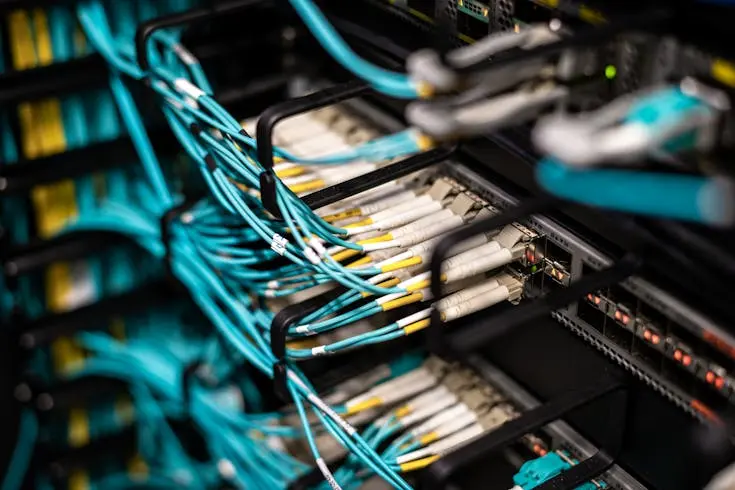
Fiber optic infrastructure is the foundation of Indonesia’s broadband ecosystem. It supports high-speed data transmission, low latency, and scalable connectivity across the archipelago.
Indonesia faces geographic challenges due to its more than 17,000 islands. Fiber optic networks, including submarine cable systems, solve this by connecting remote regions to major economic hubs. The Palapa Ring Project, for example, has significantly improved last-mile connectivity and reduced the digital divide.
This infrastructure is essential not only for telecommunications but also for industries such as fintech, e-commerce, and cloud computing. As explained in our Telecommunication Industry in Indonesia: Outlook and Opportunities, the sector continues to evolve alongside increasing digital demand.
Government Initiatives Driving Expansion
The Indonesian government plays a central role in accelerating broadband infrastructure development. Programs led by Kominfo and supported by Bappenas focus on:
- Expanding rural internet access
- Increasing network densification in urban areas
- Encouraging private and foreign investment
- Strengthening regulatory frameworks
These initiatives align with Indonesia’s long-term vision to become Southeast Asia’s largest digital economy. According to the World Bank, digital infrastructure investment is a key driver of GDP growth and innovation in emerging markets like Indonesia.
Market Demand and Growth Potential
Indonesia’s internet user base continues to grow rapidly, exceeding 200 million users. This creates strong demand for reliable and high-speed broadband services.
Fiber optic expansion directly supports:
- Data centers and cloud infrastructure
- Smart cities and IoT ecosystems
- Streaming and digital entertainment
- Enterprise digital transformation
For a broader perspective, you can explore our Complete Guide to Indonesia’s Digital Economy, which outlines how connectivity drives business innovation across sectors.
Investment Opportunities for Foreign Investors
Fiber optic network expansion presents multiple entry points for foreign investors. These include:
1. Infrastructure Development
Invest in building fiber networks, including backbone and last-mile connectivity.
2. Partnerships with Local Operators
Collaborate with companies like Telkom Indonesia to expand network reach and capabilities.
3. Submarine Cable Projects
Support international connectivity through regional cable systems linking Indonesia to global networks.
4. Digital Ecosystem Integration
Leverage fiber infrastructure to build services such as data centers, cloud platforms, and IoT solutions.
Indonesia’s regulatory environment is increasingly open to foreign participation, especially in strategic sectors like telecommunications and digital infrastructure.
Challenges to Consider
While the opportunities are significant, investors should also be aware of challenges such as:
- Complex geography and logistics
- Regulatory compliance and licensing
- Infrastructure costs in remote areas
- Competition among telecom providers
These challenges can be mitigated through local expertise and strategic partnerships.
Future Outlook: Fiber + 5G + Digital Growth
The future of Indonesia’s digital economy lies in the integration of fiber optics with 5G and emerging technologies. Fiber networks provide the backbone for 5G deployment, enabling faster speeds and more reliable connectivity.
To understand the full impact, read our next article on the impact of 5G on IoT, telecommunication, and digital business growth in Indonesia.
FAQs
What is fiber optic network expansion?
Fiber optic network expansion refers to the development and extension of high-speed broadband infrastructure using fiber cables to improve internet connectivity.
Why is fiber optic important in Indonesia?
It enables reliable internet access across islands, supports digital services, and reduces the connectivity gap between urban and rural areas.
What is the Palapa Ring Project?
It is a national infrastructure project that connects Indonesia through a fiber optic backbone, improving nationwide broadband access.
Can foreign investors invest in Indonesia’s telecom sector?
Yes, Indonesia allows foreign investment in telecommunications, subject to regulations and partnership structures.
How does fiber optic support 5G?
Fiber provides the high-capacity backbone needed for 5G networks to deliver fast and low-latency connectivity.
References
- https://www.komdigi.go.id/transformasi-digital/infrastruktur-digital
- https://komens.bappenas.go.id/public/storage/files/1726560341_Potret_Transformasi_Digital_di_Indonesia.pdf
- https://www.cnbcindonesia.com/opini/20251230155414-14-698376/konsolidasi-fiber-optik-peran-negara-tentukan-akses-digital-rakyat-ri