Indonesia’s climate regulations are changing where capital goes. For foreign investors, understanding these policies is now a practical requirement. Frameworks like the Indonesia Taxonomy for Sustainable Finance (TKBI), the Just Energy Transition Partnership (JETP), and the national carbon trading market determine which sectors qualify for green financing, which assets ESG-focused funds will touch, and what compliance obligations come with operating in covered industries.
This article covers Indonesia’s major climate policies, explains how each one affects investment decisions, and identifies the real opportunities and friction points for foreign investors entering the market today.
Indonesia’s Climate Commitments Under the NDC
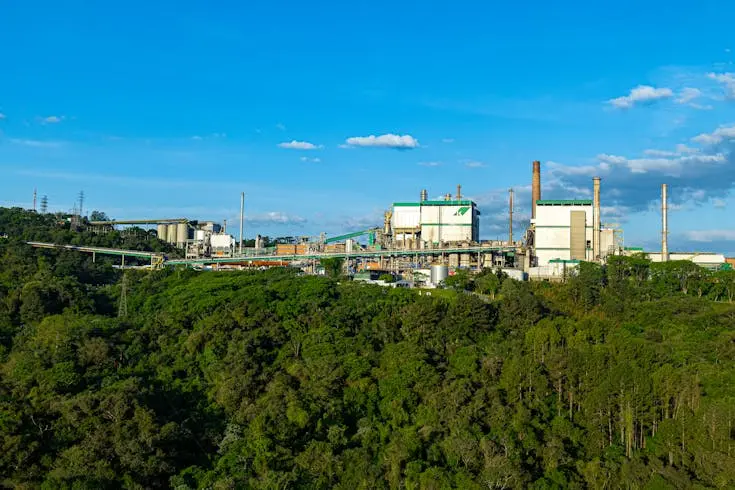
Indonesia ratified the Paris Agreement through Law No. 16 of 2016. In October 2025, the government submitted its second Nationally Determined Contribution (NDC) covering the 2031 to 2035 period. The updated NDC targets an emissions reduction of 31.89 percent unconditionally, and 43.20 percent with international support, compared to the business-as-usual baseline by 2030.
The NDC projects that Indonesia will reach its emissions peak in 2030 at roughly 1,244 MtCO₂e, then decline to 540 MtCO₂e by 2050, with net zero targeted by 2060. Under Regulation No. 40 of 2025 on National Energy Policy, renewable energy should make up 19 to 23 percent of the primary energy mix by 2030, rising to 36 to 40 percent by 2040, and 70 to 72 percent by 2060.
Implementing the second NDC is estimated to require roughly IDR 7,552.5 trillion (approximately USD 473 billion). The government’s own Climate Budget Tagging report shows public spending covered only 16.4 percent of climate-related investment needs between 2018 and 2023. The remaining 83.6 percent must come from private and international sources. This gap is not abstract. It represents a real and large demand for foreign capital in sectors the government has explicitly prioritized.
For context on why Indonesia continues to draw foreign investors beyond climate policy, see the article on why Indonesia remains an attractive foreign investment destination.
Key Climate Policies That Affect Investment Decisions
Indonesia has built a growing body of regulations that define and incentivize sustainable investment. These are not aspirational targets. They create real legal and financial consequences for businesses operating in covered sectors.
Indonesia Taxonomy for Sustainable Finance (TKBI)
OJK published TKBI Version 2 in February 2025. This expanded the classification framework beyond the energy sector to include 192 additional business classification codes across construction and real estate, transportation and storage, and parts of the agriculture, forestry, and other land use sectors, including forestry and palm oil plantations.
Under the TKBI, economic activities are classified as “Green,” “Transition,” or “Does Not Meet Classification.” This classification directly affects whether a project can access green financing instruments, qualify for ESG-focused capital, or meet reporting requirements under OJK’s sustainable finance regulations.
Under Law No. 4 of 2023 on the Development and Strengthening of the Financial Sector (the P2SK Law), financial institutions, issuers, and public companies must integrate ESG aspects into their business and investment strategies. One thing many foreign investors miss is that TKBI classification is not just a reporting exercise. Banks and institutional funds increasingly use it to screen whether they will finance a project at all. OJK plans to release TKBI Version 3 in 2026, extending coverage to manufacturing, industrial processes, water supply, and additional agricultural activities.
Just Energy Transition Partnership (JETP)
Indonesia’s JETP channels USD 20 billion in climate financing from partner countries toward energy sector decarbonization. The Comprehensive Investment and Policy Plan (CIPP) maps the specific projects and policies this financing targets: power sector decarbonization, just transition programs for coal-dependent communities, and scaling of renewable generation.
A WRI Indonesia analysis from October 2025 projected that every USD 1 billion invested in renewable energy under the JETP scenario generates USD 1.41 billion in economic returns, with more than 2.8 million jobs created in renewable energy construction and power generation. JETP-aligned investment opportunities span solar, geothermal, small-scale hydro, and grid modernization across the archipelago.
MEMR Regulations No. 5 and 10 of 2025 strengthened this framework by introducing a clearer energy transition roadmap and improving the terms of power purchase agreements. That last point matters for project finance. Better-structured offtake agreements reduce revenue risk, which is often the critical barrier to unlocking private capital in infrastructure.
Green Bonds and Green Sukuk
Indonesia was among the first countries to issue sovereign green sukuk, launching its framework in 2018. The government has issued green bonds and sukuk every year since. The Green Sukuk initiative raised USD 3.25 billion in 2024 alone, financing renewable energy, sustainable transport, and coastal resilience projects.
OJK Regulation No. 18 of 2023 (POJK 18/2023) expanded the legal basis for sustainable finance instruments to include green bonds, green sukuk, sustainability bonds, and sustainability-linked bonds. Indonesia’s sustainable bond market reached USD 14.4 billion by early 2025, with green bonds accounting for roughly 73 percent of total issuance.
Also read: Top Sustainable Investment Opportunities in Indonesia by Sector
Indonesia’s Carbon Trading Market
Indonesia launched its national carbon market through IDX Carbon, supervised by OJK. Regulated companies receive carbon quotas (PTB). Those emitting below their quota can sell surplus allowances; those exceeding their quota must buy credits. Low-emission projects can generate carbon credits (SPE GRK) that are tradable on the exchange.
For investors in clean energy or certified forestry projects, carbon credits generated from verified activities create a secondary revenue stream on top of core project returns. For companies operating in emissions-intensive industries, participation in the carbon market is a compliance reality that affects operating costs from day one.
Not Sure Which Green Sector Fits Your Investment Plans?
InvestinAsia’s team of 380+ in-house professionals helps foreign investors set up compliant PT PMA entities across Indonesia’s green economy sectors.
Where the Investment Opportunities Actually Are
Indonesia’s climate policy framework creates concrete investment channels. Each sector carries its own regulatory structure, incentive terms, and practical conditions on the ground.
Renewable Energy
Renewable energy is fully open to 100 percent foreign ownership under the Positive Investment List. The sector qualifies for tax holidays of up to 20 years, with eligible investments spanning solar, geothermal, hydropower, and green hydrogen. Indonesia targets 100 GW of new generating capacity over the next 15 years, with 70 percent sourced from renewables.
The article on Indonesia’s incentives for green tech and renewable energy covers the specific tax holiday tiers, carbon credit mechanisms, and EV manufacturing incentives available to investors in this space.
Green Construction and Sustainable Transport
TKBI Version 2 now formally classifies sustainable construction and transportation activities. Projects meeting the Technical Screening Criteria can access green bond and sukuk financing, and ESG-focused institutional investors increasingly treat TKBI classification as a baseline requirement. Indonesia’s urban mass transit expansion and electric vehicle manufacturing push (targeting 600,000 EVs produced by 2030) make this an active sector with tangible regulatory backing.
Sustainable Agriculture and Forestry
The TKBI now covers forestry and palm oil plantations. Indonesia holds approximately 125 million hectares of forest, and the government’s FOLU Net Sink 2030 target aims for net negative emissions of 140 MtCO₂e from the land sector by the end of the decade. Investments in certified sustainable forestry and ecosystem restoration can qualify as “Green” under the taxonomy, opening access to international sustainability-linked finance instruments.
Challenges Foreign Investors Should Anticipate
Indonesia’s green investment environment has real opportunity. It also has regulatory complexity that investors frequently underestimate.
Regulatory fragmentation is a documented problem. OJK’s TKBI classification does not always align with the criteria applied by sector ministries such as the Ministry of Energy and Mineral Resources (ESDM) or the Ministry of Environment and Forestry (KLHK). Renewable energy projects routinely require licensing across multiple agencies, each with different document requirements and processing timelines. This raises transaction costs and can delay project commissioning by months.
There is also a tension between stated policy ambition and on-the-ground implementation that foreign investors should factor into their due diligence. Indonesia’s second NDC sets a renewable energy target of only 19 to 23 percent by 2030. Climate Action Tracker has assessed this as falling short of a 1.5°C-aligned pathway. New coal capacity remains part of the national energy plan through 2034. For investors in renewable energy projects, thorough grid access assessment is critical before committing capital, as PLN’s appetite for variable renewable offtake has historically been constrained.
Currency exposure is a practical consideration that project finance models need to account for. Most of Indonesia’s sustainable bond issuances are denominated in foreign currencies, but operational revenues from Indonesian projects are typically in rupiah. Investors structuring PT PMA investments in capital-intensive sectors usually build in hedging arrangements from the start.
Fiscal Incentives Supporting Green Investment
Foreign investors in qualifying green sectors benefit from a set of fiscal incentives that reduce the upfront and operational cost of market entry.
Tax holidays of up to 100 percent corporate income tax exemption for five to 20 years apply to pioneer sectors including renewable energy, green hydrogen, and electric vehicle component manufacturing. Investments exceeding IDR 500 billion qualify for the maximum exemption period, with a 50 percent income tax reduction for two additional years after the holiday ends.
Super deductions of up to 300 percent apply to qualifying research and development expenditures, and 200 percent to approved vocational training programs. Both are relevant for companies building technical capacity in clean energy operations or sustainable agriculture. Applications for all these incentives go through the OSS system and are evaluated by BKPM and the Ministry of Finance.
For a breakdown of which sectors qualify for which incentives, the article on Indonesia’s tax incentives by sector covers the full structure with qualifying criteria.
How Foreign Investors Actually Enter Indonesia’s Green Economy
Foreign investors in Indonesia’s green sectors operate through a PT PMA. This is the standard vehicle for foreign-owned commercial operations, and it allows full foreign ownership in sectors open under the Positive Investment List. Renewable energy and green construction are both classified as fully open. A PT PMA requires a minimum investment of IDR 10 billion per KBLI business field, at least two shareholders, one resident director, and one commissioner.
In practice, what many new PT PMA founders in green energy discover is that licensing involves more coordination than a standard commercial investment. OJK TKBI classification (if accessing green finance), KLHK environmental permits, and sector-specific licensing from ESDM all run on separate tracks, with different documentation standards. Getting these right in sequence, and in the right order, matters for how long it takes to achieve operational status.
Foreign founders who want the process handled correctly from the beginning can use InvestinAsia’s PT PMA registration service, which covers the full process from notarial deed to operational licenses, including coordination across the sector-specific agencies relevant to green economy investments.
For a broader look at Indonesia’s FDI framework, capital requirements, and entity options, the complete guide to foreign direct investment in Indonesia is a useful starting point.
This article is for informational purposes and does not replace consultation with a qualified legal or investment professional.
Need Help Setting Up Your PT PMA for a Green Sector Investment?
InvestinAsia handles PT PMA registration end-to-end, including licensing for renewable energy, green construction, and sustainable agriculture projects.
Frequently Asked Questions
What is TKBI and why does it matter for foreign investors?
TKBI (Taksonomi Keuangan Berkelanjutan Indonesia) is OJK’s official classification framework for sustainable economic activities. It labels activities as “Green,” “Transition,” or “Does Not Meet Classification.” For foreign investors, this matters because financial institutions and ESG-focused funds increasingly require TKBI alignment before they will finance a project. TKBI Version 2, released in February 2025, extended coverage to real estate, transport, forestry, and palm oil sectors. Version 3 is planned for 2026.
How does Indonesia’s carbon trading market work for businesses?
Indonesia’s carbon market runs through IDX Carbon, supervised by OJK. Companies in regulated sectors receive carbon quotas. Those emitting below their quota can sell the surplus; those exceeding it must buy credits. Low-emission projects can generate tradable carbon credits, creating both a compliance obligation for high-emission businesses and an additional revenue source for clean energy or forestry investors with verified projects.
Are renewable energy projects fully open to foreign ownership in Indonesia?
Yes. Renewable energy is fully open under the Positive Investment List, allowing 100 percent foreign ownership through a PT PMA. The sector qualifies for tax holidays of up to 20 years. Grid access and power purchase agreement terms with PLN are the main due diligence factors that vary by project location and capacity.
What is the JETP and how does it affect investment opportunities?
Indonesia’s Just Energy Transition Partnership channels USD 20 billion in climate financing from partner countries toward energy sector decarbonization. The Comprehensive Investment and Policy Plan maps the projects JETP financing targets. For foreign investors, JETP opens co-investment opportunities in renewable generation, grid infrastructure, and just transition programs. These are often structured as blended finance arrangements designed to reduce risk for private capital entering the market.
What fiscal incentives apply to green sector investments in Indonesia?
Green sector investments can qualify for corporate income tax holidays of up to 100 percent for five to 20 years, depending on investment scale. Other benefits include a 50 percent income tax reduction for two years after the holiday, super deductions of up to 300 percent for R&D expenditures, and import duty exemptions on capital goods for pioneer sectors. All applications go through the OSS system and are evaluated by BKPM and the Ministry of Finance.
What legal entity should a foreign investor use to enter Indonesia’s green economy?
The standard vehicle is a PT PMA (Perusahaan Terbatas Penanaman Modal Asing), which allows full foreign ownership in sectors open under the Positive Investment List. It requires a minimum investment of IDR 10 billion per KBLI business field, at least two shareholders, one resident director, and one commissioner. Licensing for green economy investments typically involves OJK (for TKBI classification if accessing green finance), KLHK (for environmental permits), and ESDM (for energy projects).
References
1. Financial Services Authority of Indonesia (OJK). (2025). Indonesia Taxonomy for Sustainable Finance (TKBI) Version 2. Retrieved from
https://ojk.go.id/en/Publikasi/Roadmap-dan-Pedoman/Sektor-Jasa-Keuangan/Keuangan-Berkelanjutan/Pages/Taxonomy-for-Indonesian-Sustainable-Finance-2nd-Edition.aspx
2. Government of Indonesia. (2025). National Energy Policy (Kebijakan Energi Nasional), Regulation No. 40 Year 2025. Retrieved from
https://esdm.go.id
3. Chambers and Partners. (2025). ESG 2025: Indonesia Trends and Developments. Retrieved from
https://practiceguides.chambers.com/practice-guides/esg-2025/indonesia/trends-and-developments
4. World Resources Institute. (2025, October 14). Release: Clean Energy Investments Can Power Indonesia’s Growth and Advance Its Net-Zero Goals. Retrieved from
https://www.wri.org/news/release-clean-energy-investments-can-power-indonesias-growth-and-advance-its-net-zero-goals
5. Climate Action Tracker. (2025). Indonesia: Policies and Action. Retrieved from
https://climateactiontracker.org/countries/indonesia/policies-action/
6. Ministry of Finance of the Republic of Indonesia. (2023). Climate Budget Tagging Report 2018–2023. Retrieved from
https://www.kemenkeu.go.id