Indonesia’s Internet of Things (IoT) industry is one of Southeast Asia’s fastest-growing digital sectors, driven by strong government initiatives such as Making Indonesia 4.0, expanding 5G infrastructure, and increasing enterprise adoption across manufacturing and smart cities. The market is projected to reach tens of billions of dollars, supported by institutions like the Ministry of Communication and Information Technology (Kominfo) and the Ministry of Industry.
For foreign investors, this means Indonesia is no longer an emerging opportunity, but a rapidly scaling IoT ecosystem with clear entry points across multiple industries.
Market Size and Growth Potential
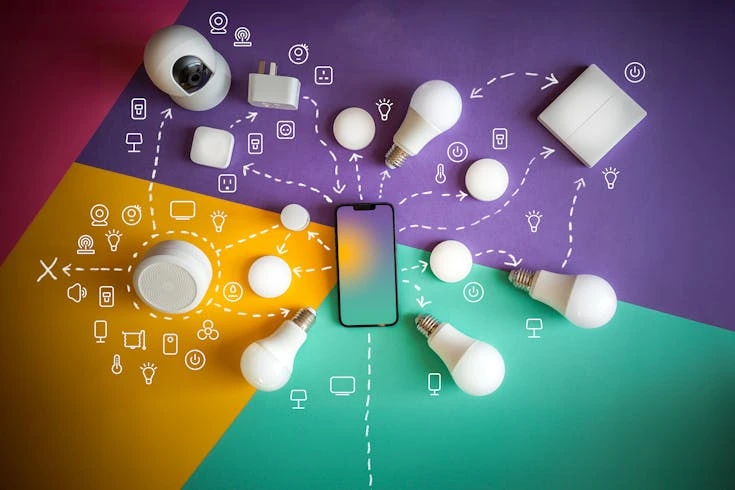
Indonesia’s IoT market shows strong upward momentum. Estimates suggest it could reach around USD 40 billion (approximately IDR 572 trillion) by 2025, with continued double-digit growth beyond 2030.
More recent projections indicate the market will grow from USD 14.98 billion in 2026 to nearly USD 29.8 billion by 2031, at a CAGR of around 14–15%.
This growth is fueled by:
- Rapid digital transformation across enterprises
- Expansion of 5G and LPWAN connectivity
- Rising demand for real-time data and automation
Key Sectors Driving IoT Adoption
1. Manufacturing and Industrial IoT
Industrial IoT leads adoption, especially in smart factories and predictive maintenance systems. Manufacturing alone contributes over 30% of IoT usage.
2. Smart Cities
Smart city initiatives account for a significant portion of the market, including traffic management, surveillance, and waste systems.
3. Agriculture and Plantations
IoT enables precision farming, livestock monitoring, and irrigation optimization—critical for Indonesia’s agrarian economy.
4. Energy and Utilities
IoT supports smart grids, energy monitoring, and ESG compliance, which is becoming increasingly important for enterprises.
5. Healthcare and Consumer IoT
Connected health devices and smart home systems are growing segments, driven by urban middle-class demand.
Government Support and Regulations
Indonesia’s government plays a central role in shaping the IoT ecosystem.
Policy Framework
- Making Indonesia 4.0: Encourages industrial automation and IoT adoption
- National Digital Transformation Strategy: Supports infrastructure and innovation
- Data sovereignty policies: Require local data processing in some cases
Regulatory Considerations
Foreign IoT companies must consider:
- PSE (Electronic System Provider) registration
- Data protection compliance
- Local content requirements (TKDN)
These regulations are designed to strengthen the domestic digital ecosystem while ensuring security and compliance.
Also read: IoT Regulations in Indonesia: Policies, Compliance, and Data Laws
Infrastructure and 5G Impact
IoT growth is closely tied to connectivity. Indonesia already has wide 4G coverage and is rapidly expanding 5G networks, which enable:
- Low-latency applications
- Real-time analytics
- Edge computing deployment
For deeper insights, you should explore how broadband expansion and 5G rollout directly influence IoT scalability and digital business growth in Indonesia.
Challenges in the IoT Ecosystem
Despite strong growth, several challenges remain:
- Uneven infrastructure across regions
- Cybersecurity and data privacy concerns
- Skills shortage in IoT engineering
- High initial investment costs
However, these challenges also create opportunities for foreign investors to provide solutions, expertise, and capital.
Competitive Landscape and Market Players
Indonesia’s IoT ecosystem includes:
- Telecommunications providers expanding connectivity
- Local system integrators
- Global technology companies entering through partnerships
More than 250 companies are already part of the IoT ecosystem, indicating a growing but still fragmented market.
Opportunities for Foreign Investors
Indonesia offers strong entry points in:
- Smart city infrastructure projects
- Industrial automation solutions
- Data centers and edge computing
- Agri-tech and environmental monitoring
The combination of large population, government support, and digital acceleration makes it a high-potential market.
How We Help You Enter the IoT Market
Entering Indonesia’s IoT industry requires more than just technology. You need the right legal structure, regulatory compliance, and local understanding.
We often see foreign investors struggle with:
- Setting up a compliant legal entity
- Navigating licensing and PSE requirements
- Understanding local regulations and incentives
This is exactly where our team comes in.
Through our experience, we simplify the process of establishing your business presence in Indonesia. If you want a deeper understanding of the process, you can explore how InvestinAsia streamline the incorporation journey for foreign investors.
Start Your IoT Business in Indonesia
If you are planning to invest in Indonesia’s IoT ecosystem, setting up a foreign-owned company (PT PMA) is the first step.
We support you with:
- Company registration (PT PMA)
- Licensing and compliance
- Market entry advisory
Learn more about our services here: Indonesia PT PMA Company Registration Services for Foreigners
Indonesia’s IoT industry presents a compelling opportunity for foreign investors. With strong government backing, expanding digital infrastructure, and high demand across industries, the country is positioned as a regional IoT powerhouse.
The key to success lies in understanding the regulatory landscape, identifying the right sector, and entering the market with a compliant and scalable strategy.
FAQs About IoT Industry in Indonesia
What is the current size of the IoT market in Indonesia?
The market is estimated to reach around USD 40 billion by 2025 and continue growing at double-digit rates.
Which sectors use IoT the most in Indonesia?
Manufacturing, smart cities, agriculture, and energy are the leading sectors.
Is IoT regulated in Indonesia?
Yes. Companies must comply with regulations such as PSE registration, data protection laws, and local content requirements.
How does 5G impact IoT in Indonesia?
5G enables faster, low-latency connections, which are essential for advanced IoT applications.
Can foreign investors enter the IoT market easily?
Yes, but they must establish a PT PMA entity and comply with local regulations.
References
- https://money.kompas.com/read/2023/03/19/140000026/pasar-iot-di-indonesia-diprediksi-capai-rp-572-7-triliun-pada-2025-
- https://www.mordorintelligence.com/industry-reports/indonesia-iot-market
- https://www.markwideresearch.com/indonesia-iot-market/
- https://www.kenresearch.com/indonesia-enterprise-iot-market
- https://www.idnfinancials.com/archive/news/20699/IoT-market-in-Indonesia-estimated-to-reach-Rp-1620-trillion-in-2025