Sustainable agriculture in Indonesia refers to farming and agribusiness systems that integrate environmental stewardship, economic viability, and social responsibility across food crops, plantations, and agricultural processing. Indonesia’s sustainable agriculture industry combines large-scale arable land, tropical biodiversity, and government-backed incentives to support organic farming, agroforestry, climate-smart cultivation, and value-added processing for export and domestic markets.
The sustainable agriculture industry in Indonesia attracts foreign and domestic investors seeking long-term returns from certified organic products, traceable supply chains, and downstream agribusiness activities such as food processing and bio-based manufacturing. This guide explains Indonesia’s sustainable agriculture sector from a practical investment and operational perspective, covering market structure, licensing, ownership rules, and regional advantages relevant to scalable and compliant agribusiness development.
At InvestinAsia, we work closely with foreign investors and business owners who want to enter Indonesia’s agriculture sector but need clarity on regulation, licensing, and market structure. This guide explains the industry from an investment and operational perspective, not theory.
Also read; Major Industries in Indonesia (Based on Contribution to GDP)
Industry Overview and Market Potential
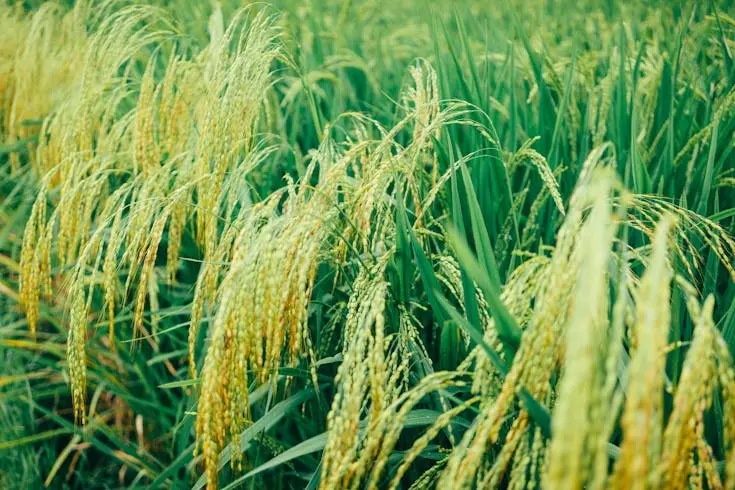
Indonesia’s agriculture sector contributes more than 12 percent of national GDP and employs nearly 40 million people. More importantly, it is transitioning from volume-driven commodity exports to sustainability-led, value-added production.
This shift is driven by food security priorities, export market standards, and climate pressures. Sustainable agriculture is no longer a niche. It is a national strategy.
Key Sustainable Agriculture Sectors
Below are the key sectors of the sustainable agriculture industry in Indonesia:
Organic Agriculture
Organic coffee, rice, spices, and vegetables are growing rapidly, supported by export demand and rising domestic consumption. Certified organic products command price premiums of 15 to 40 percent, especially in Europe, Japan, and North America.
Horticulture and High-Value Crops
Fresh fruits, vegetables, and herbs represent one of the fastest-growing export segments. Cold-chain investment and post-harvest handling are critical success factors, creating opportunities beyond farming alone.
Estate Crops with Sustainable Models
Coffee, cocoa, rubber, and coconut remain core commodities. Sustainable variants such as agroforestry and shade-grown systems reduce climate risk while increasing long-term margins.
Processing and Agricultural Downstreaming
Processing is where foreign investors gain the strongest control and tax advantages. Coffee roasting, cocoa processing, food manufacturing, and bio-based products are prioritized by the government.
Also read: Indonesia Agriculture Industry: Outlook and Potential
Regional Advantages Across Indonesia
Java offers infrastructure and market access but higher competition. Sumatra provides scale for plantations and agroforestry. Kalimantan and Papua offer long-term land potential with higher environmental scrutiny.
The right region depends on your crop, export target, and investment horizon. There is no single best province, only best-fit locations.
Government Support and Incentives
Indonesia supports sustainable agriculture through tax holidays, tax allowances, import duty exemptions, and research incentives. Processing and downstream activities qualify as pioneer industries with significant corporate income tax relief.
Accessing these incentives requires proper investment structuring, reporting, and coordination with BKPM and the Ministry of Finance.
Challenges and Risk Considerations
The following are the risks and challenges you may face when doing business in sustainable agriculture:
Land tenure complexity
Foreign investors cannot own agricultural land directly and must rely on long-term lease mechanisms such as HGU or Hak Pakai. In some regions, customary land rights may overlap with formal titles, requiring careful legal due diligence.
Environmental and zoning compliance
Sustainable agriculture projects often require AMDAL or UKL-UPL approvals. Non-compliance with environmental or spatial planning regulations can delay operations and licensing.
Climate variability
El Niño and La Niña cycles affect rainfall patterns, causing yield volatility. Climate-smart farming practices and crop diversification are essential risk mitigation strategies.
Infrastructure gaps
Outside Java, irrigation systems, cold storage, and logistics infrastructure may be limited. Investors often need to allocate additional capital for supporting infrastructure.
Regulatory interpretation differences
Licensing requirements and ownership limits can be interpreted differently at central and regional levels, making local regulatory expertise critical.
Labor and skills availability
Modern sustainable farming requires trained labor, while rural workforce migration creates skills gaps. Continuous training and mechanization are often necessary.
Market and price volatility
Commodity prices fluctuate significantly. Certified, organic, or value-added products help stabilize margins through premium pricing.
Future Outlook and Regional Comparison
Compared to Vietnam and Thailand, Indonesia offers greater land availability, crop diversity, and domestic market depth. Sustainable agriculture is projected to grow faster than conventional farming through 2030.
Global demand for traceable, ethical, and climate-resilient food favors Indonesia’s long-term position.
Also read; Comparing Indonesia’s Foreign Business Entry Barriers vs. Other ASEAN Countries
Licensing and Legal Structure for Foreign Investors
Foreign participation in agriculture requires a PT PMA. This is the only structure that allows legal foreign ownership, banking access, and eligibility for incentives.
Ownership limits vary by activity. Cultivation of food crops is more restricted, while plantations and processing allow higher foreign ownership. Licensing is managed through the OSS system, covering business identification, tax registration, location permits, and environmental approvals.
At this stage, many investors engage us to establish a compliant PT PMA, structure shareholding correctly, and align KBLI classifications with their long-term strategy.
Our PT PMA registration service is designed specifically for sectors like sustainable agriculture, where mistakes at setup are costly to fix later.
Check: Why Foreign Investors Choose InvestinAsia for PT PMA Registration in Indonesia
Next Steps
Indonesia’s sustainable agriculture industry offers rare alignment between profitability, policy support, and environmental impact. For foreign investors, success depends on entering with the right legal foundation and realistic operational planning.
If you plan to establish or formalize a sustainable agriculture business in Indonesia but do not yet have legal entity status, our team at InvestinAsia provides complete Indonesia company registration services, from PT PMA setup to full operational licensing. We position your business to operate legally, scale efficiently, and attract long-term value.
If you are interested in starting a sustainable agriculture business in Indonesia, you can start by contacting us for FREE consultation.
Frequently Asked Questions
Is sustainable agriculture open to foreign investors in Indonesia?
Yes. Foreign investors can operate legally through a PT PMA, subject to sector-specific ownership rules.
Which agriculture activities allow high foreign ownership?
Processing, downstream manufacturing, and certain plantation activities allow up to 95 percent foreign ownership.
How long does it take to start an agriculture business?
Company formation takes two to four weeks. Full licensing typically requires four to seven months.
Does Indonesia support organic and climate-smart farming?
Yes. Government programs, tax incentives, and export facilitation actively support sustainable agriculture.
Is Indonesia suitable for long-term agribusiness investment?
Yes. The combination of market size, policy direction, and natural resources supports long-term growth.