Indonesia has a waste problem large enough to power cities. It generates an estimated 35 to 60 million tons of municipal solid waste every year, and most of it ends up in landfills that are either full or barely managed. Presidential Regulation No. 109 of 2025 (PR 109/2025) changed the rules around who can invest in turning that waste into electricity, and how. Foreign investors now have a cleaner legal and revenue structure to work with than at any point in the past decade. The opportunities are real. So are the complications.
Why the Waste Sector Deserves a Closer Look
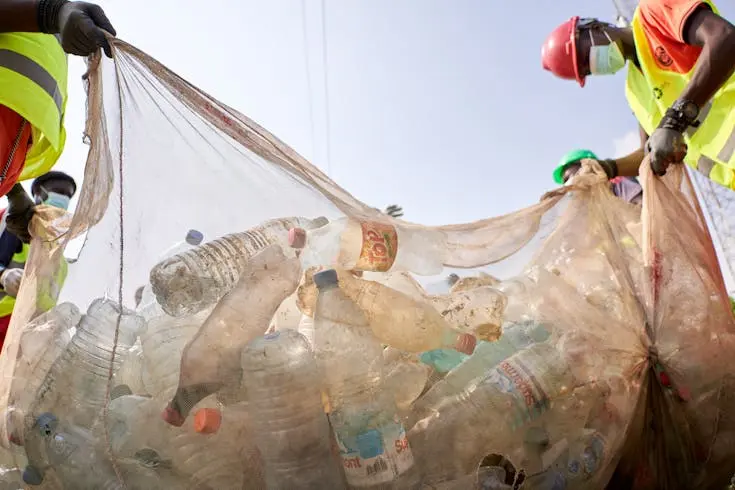
Nearly 60% of Indonesia’s municipal solid waste is organic. Government estimates put the energy potential at roughly 15 megawatts for every 1,000 tons of waste processed per day. Spread across 33 cities now targeted for waste-to-energy (WtE) development, that is a lot of feedstock sitting in the ground.
What changed is not the waste. What changed is the government’s willingness to structure the sector so that foreign capital and technology can actually enter it at scale. For investors tracking Southeast Asia’s energy transition, Indonesia’s renewable energy and green tech incentive framework shows how the policy environment has shifted more broadly.
What PR 109/2025 Actually Changed
Presidential Regulation No. 35 of 2018 was the previous legal basis for WtE development in Indonesia. Most practitioners in the sector considered it unworkable in practice. Revenue was split between tipping fees from local governments and a feed-in tariff from PLN, the state electricity company. Those two streams required tight coordination between municipal governments and a national utility. That coordination rarely happened. Projects stalled.
PR 109/2025, signed in 2025, scraps the dual-revenue model entirely.
A Single Revenue Stream Through PLN
All WtE projects now receive a single offtake agreement with PT PLN (Persero): a fixed feed-in tariff of USD 0.20 per kilowatt-hour, locked in for 30 years. No tipping fees. One creditworthy counterparty. Cash flow modelling becomes substantially simpler for lenders and developers.
The tradeoff is that feedstock risk transfers to regional governments. They are now formally obligated under the regulation to guarantee waste supply and transport logistics to the facility. Whether municipalities can actually deliver on that obligation consistently is a different question.
BPI Danantara Takes the Lead on Procurement
Under the old framework, individual regional governments ran WtE tenders independently. The quality varied enormously. Under PR 109/2025, BPI Danantara, Indonesia’s sovereign wealth fund, takes over as the central coordinator for WtE project procurement and investment.
Danantara can participate as a direct equity investor. Its job is to sit between local governments, PLN, and private investors, and keep the pieces from falling out of sync. The government has targeted the groundbreaking of five priority WtE projects by June 2026.
33 Cities, with Seven in the First Wave
The regulation identifies at least 33 urban areas across Indonesia as technically viable for WtE development. Seven cities were shortlisted for the first phase based on waste volume, land availability, and infrastructure readiness. Jakarta and several major Java cities are in that group.
The national investment target for 2025 to 2034 is 453 megawatts of total installed capacity, backed by an estimated USD 2.72 billion in total project investment.
| Feature | PR 35/2018 (Old) | PR 109/2025 (Current) |
|---|---|---|
| Revenue structure | Dual: tipping fee + FiT | Single: PLN FiT only |
| Feed-in tariff | Variable / lower rate | USD 0.20/kWh fixed, 30 years |
| Procurement authority | Regional governments (fragmented) | BPI Danantara (centralized) |
| Target cities | 12 cities (selected) | 33 cities (national) |
| Foreign investor access | Limited regulatory clarity | Open under PT PMA structure |
Where the Investment Opportunities Are
Foreign capital can enter the WtE sector through several routes. Which one fits depends on what a foreign investor brings to the table.
Direct Project Development
For infrastructure funds and project developers, the 30-year PLN offtake agreement is the headline. USD 0.20/kWh is materially higher than legacy tariff rates, and a single creditworthy counterparty makes debt financing far more straightforward than the old tipping-fee structure.
The tariff is not escalating, though. What you get in 2025 is what you get in 2045. Modelling long-term returns requires realistic assumptions about how operating costs will move over the project life. That calculation is important to get right before financial close, not after.
Technology Partnership and Equipment Supply
Indonesia does not have mature domestic WtE technology. Japan, Germany, and Scandinavia do. That gap is a real opening for foreign technology providers and equipment suppliers who want a foothold in a growing market without taking on the full capital exposure of project ownership.
Licensing agreements, joint ventures, and engineering, procurement and construction contracts are all viable structures for technology partners. For smaller foreign firms, this may be a more manageable entry point than direct equity participation.
Green Investment Incentives
WtE projects qualify under Indonesia’s green energy priority category. Depending on investment size, that means potential access to tax holidays of up to 20 years. The sector sits on the open portion of Indonesia’s Positive Investment List, so up to 100% foreign ownership is permitted in most configurations.
Indonesia’s tax incentive framework has the detail on eligibility thresholds and the OSS application process for qualifying investors.
Considering Indonesia’s WtE Sector?
Legal structure needs to be in place before a Danantara tender is awarded. Early preparation prevents costly delays.
The Challenges That Actually Matter
PR 109/2025 is a genuine improvement. But Indonesia’s WtE sector has structural challenges that a better regulation does not fix by itself. Investors who built projects in European or Japanese markets will hit conditions here that require different thinking.
Indonesia’s Waste Burns Poorly
Indonesian household waste is predominantly organic, with a high moisture content and a calorific value averaging between 1,000 and 1,300 kilocalories per kilogram. In Japan, that figure typically runs from 1,800 to 2,500 kcal/kg. Germany is similar.
That gap matters when selecting incineration technology. Equipment designed for high-calorific European or Japanese waste streams often struggles with Indonesian feedstock. It may need pre-treatment, auxiliary fuel, or a fundamentally different combustion approach. Technology selection needs to start from the actual waste profile of each target city, not from a standard procurement template.
Local Governments Cannot Always Deliver
The regulation formally obliges regional governments to guarantee waste supply and transport logistics to WtE facilities. In practice, Indonesian municipalities have historically had real difficulty with consistent collection coverage, accurate waste volume reporting, and inter-agency coordination.
Centralizing procurement through Danantara helps at the national level. It does not automatically improve execution capacity at the city level. Investors who skip independent feedstock due diligence and rely entirely on government guarantees are taking on a risk that formal documents do not actually eliminate.
A Flat Tariff Over Three Decades
USD 0.20/kWh is locked in for 30 years with no escalation. That is the deal. Operating costs in 2045 will not be what they are in 2025. Maintenance, labor, consumables, and waste logistics will all move, and none of them will move down.
Legal analysis from Allen and Overy Shearman also flags that PR 109/2025 is silent on waste composition standards. If delivered waste does not meet the technical specifications required for efficient power generation, there is currently no clear framework for resolving disputes between investors and local governments about who bears the additional processing cost.
How Foreign Investors Enter the WtE Market
The legal vehicle for most foreign investors is a PT PMA (Perseroan Terbatas Penanaman Modal Asing), a foreign-owned limited liability company established under Law No. 25 of 2007 on Investment.
A PT PMA allows 100% foreign ownership in open sectors, including renewable energy and waste processing. Registration goes through the Online Single Submission (OSS) system managed by the Investment Coordinating Board (BKPM). For WtE projects specifically, sectoral licenses from the Ministry of Energy and Mineral Resources (ESDM) and environmental permits from the Ministry of Environment and Forestry (KLHK) are required alongside the NIB.
Investors who want to understand the structure before committing to a project entity will find a practical guide to what a PMA company is and how it functions in Indonesia useful at this stage. For a broader picture of how foreign capital enters the country across sectors, InvestinAsia’s FDI guide covers the legal framework from start to finish.
One thing to keep in mind: Danantara’s project timelines do not pause for company registration. Once a project company is selected through the tender process, compliance deadlines begin. Getting the PT PMA in place before that point is not optional if you want to avoid delays after award.
Coordinating the full registration process across notarial deeds, OSS, ESDM sectoral permits, and KLHK approvals requires local expertise and active follow-up with multiple agencies. InvestinAsia’s PT PMA registration service handles that pathway end-to-end, with a team of 380+ in-house professionals who work directly in the Indonesian regulatory environment.
Need to Set Up Your WtE Project Company in Indonesia?
InvestinAsia manages PT PMA formation, sectoral licensing, and compliance from day one, so your project is ready when the tender window opens.
Frequently Asked Questions
Can foreign companies invest directly in waste-to-energy projects in Indonesia?
Yes. Renewable energy and waste processing are listed as fully open sectors under Indonesia’s Positive Investment List. Foreign investors establish a PT PMA (foreign-owned limited liability company) and comply with sectoral licensing requirements from the Ministry of Energy and Mineral Resources and environmental permits from the Ministry of Environment and Forestry.
What is the feed-in tariff for waste-to-energy projects under PR 109/2025?
Presidential Regulation No. 109 of 2025 fixes the tariff at USD 0.20 per kilowatt-hour, paid by PT PLN (Persero) under a 30-year Power Purchase Agreement. There is no escalation clause, which means investors need to account for rising operating costs against a flat nominal revenue figure when modelling long-term returns.
What is BPI Danantara’s role in WtE project development?
BPI Danantara, Indonesia’s sovereign wealth fund, is appointed under PR 109/2025 as the central coordinator for WtE project procurement and investment. It can co-invest as an equity participant in project companies and is responsible for coordinating between local governments, PLN, and private investors to move projects from planning to construction.
Why did Indonesia’s earlier WtE regulation fail to attract investment?
Presidential Regulation No. 35 of 2018 split revenue between tipping fees from regional governments and a lower feed-in tariff from PLN. Synchronizing those two income streams required coordination between municipal governments and a national utility that rarely happened. Most projects stalled before reaching financial close. PR 109/2025 removes the tipping fee entirely and consolidates revenue through PLN.
What are the main technical challenges for WtE plants in Indonesia?
Indonesia’s municipal waste has a low calorific value averaging 1,000 to 1,300 kcal/kg, compared to 1,800 to 2,500 kcal/kg in Japan or Germany. The high organic content and moisture levels affect combustion efficiency. Incineration technology that works well in European or Japanese conditions often does not perform at the same level in Indonesia without pre-treatment or technology adaptation.
How long does PT PMA registration take for an energy project?
Registration typically takes four to eight weeks when handled by a professional provider with active follow-up across multiple government agencies. Sectoral permits from ESDM and environmental approvals from KLHK require additional time on top of the base OSS registration. Starting before a Danantara project tender closes is strongly advisable to avoid compliance gaps after award.
This article is for informational purposes only and does not constitute legal, investment, or financial advice. Regulations governing waste-to-energy projects in Indonesia may change. Please consult a qualified professional before making investment decisions.
References
1. Republic of Indonesia. (2025). Presidential Regulation No. 109 of 2025 on Urban Waste Management through Environmentally Friendly Technology-Based Conversion of Waste into Renewable Energy. Retrieved from
https://jdih.setneg.go.id
2. Ministry of Environment and Forestry (KLHK). (2024). National Waste Management Status Report. Retrieved from
https://www.menlhk.go.id
3. Ministry of Energy and Mineral Resources (ESDM). (2025). Indonesia Renewable Energy Development Plan 2025–2034. Retrieved from
https://www.esdm.go.id
4. A&O Shearman. (2025, October). Presidential Regulation No. 109 of 2025: A new dawn for waste-to-energy projects in Indonesia? Retrieved from
https://www.aoshearman.com/en/insights/presidential-regulation-no-109-of-2025
5. Mori Hamada and Matsumoto. (2025, November). Waste to Energy Regulation Updated: A Significant Milestone in Advancing Indonesia’s Circular Economy and Clean Energy Transition Agenda. Retrieved from
https://www.morihamada.com/en/insights/newsletters/128111
6. Ashurst / Lexology. (2025, October). Accelerating Waste-to-Energy in Indonesia: PR 109/2025’s Impact and Challenges. Retrieved from
https://www.lexology.com/library/detail.aspx?g=e0907d36-94c2-40be-a7be-ba69941ebfdf
7. ANTARA News. (2026, April). RI targets June groundbreaking for five waste-to-energy projects. Retrieved from
https://en.antaranews.com/news/413320/ri-targets-june-groundbreaking-for-five-waste-to-energy-projects