A bonded warehouse in Indonesia (Gudang Berikat) is a customs-authorized facility that allows foreign-owned companies to store imported goods under the supervision of the Directorate General of Customs and Excise (DJBC) while import duties, VAT, luxury sales tax, excise, and import income tax are suspended. Bonded warehouses in Indonesia are used by foreign investors for duty-deferred storage, regional distribution, light handling activities, and re-export operations without upfront tax exposure.
This bonded warehouse structure provides cash flow efficiency, regulatory certainty, and logistics flexibility, making it a core trade infrastructure for PT PMA companies entering or expanding in the Indonesian market.
What Is a Bonded Warehouse in Indonesia
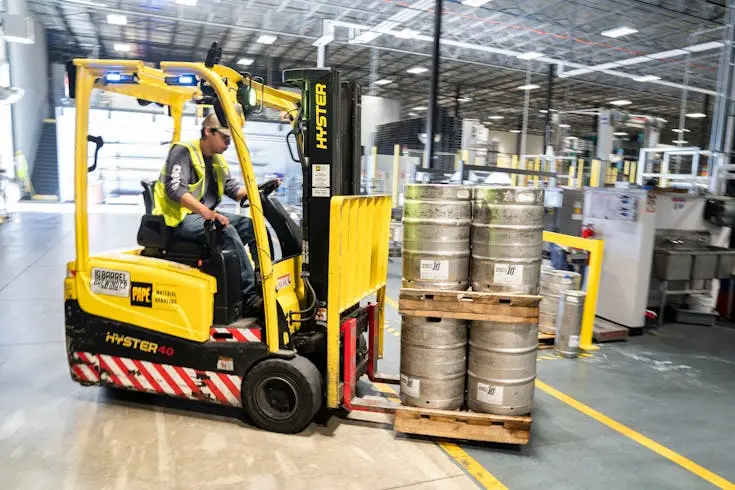
A bonded warehouse, locally known as Gudang Berikat, is a government-authorized facility where imported goods can be stored under customs control. Import duties, VAT, luxury sales tax, excise, and import income tax are suspended while goods remain inside the bonded area.
You only pay import-related taxes when goods are released into the Indonesian domestic market. If goods are re-exported directly from the bonded warehouse, no import duty is payable at all. This structure makes bonded warehouses highly attractive for international trading companies, manufacturers, and regional distribution hubs.
Also read: Indonesia’s Warehouse Industry: A Complete Guide for Foreign Investors
Legal and Regulatory Framework
Bonded warehouses operate under Indonesia’s Customs Law and related government regulations, administered by DJBC. The system is designed to balance trade facilitation with strict customs oversight.
For foreign investors, the key point is this. Bonded warehouses are not informal arrangements. They are fully regulated facilities with clear legal certainty, transparent procedures, and standardized compliance requirements. This regulatory clarity is one of Indonesia’s strongest advantages compared to other emerging markets.
Types of Bonded Facilities You Should Know
Indonesia offers several bonded facility models, each serving a different business purpose.
Bonded Warehouse (Gudang Berikat)
Used primarily for storage and basic handling. Activities are limited to repackaging, labeling, sorting, and inspection. Manufacturing is not allowed.
Bonded Zone (Kawasan Berikat)
Bonded Zone designed for export-oriented manufacturing. Companies can import raw materials duty-free and conduct full production activities, provided most output is exported.
Also read: Complete List of Bonded Zones in Indonesia: Key Industrial Clusters and Strategic Roles
Bonded Logistics Center (PLB)
A more flexible and modern option. PLBs allow storage of imported and domestic goods, longer storage periods, and broader non-manufacturing activities. Many foreign investors prefer PLBs for regional distribution.
Choosing the right facility depends on whether your business focuses on storage, manufacturing, or cross-border logistics.
Taxation and Customs Benefits
The financial advantages of bonded warehouses are substantial.
Import duties and VAT are postponed, not eliminated, for goods entering the domestic market. For re-exported goods, import duties are fully exempt. Import income tax and luxury sales tax are also suspended while goods remain bonded.
From our experience advising foreign companies, this structure dramatically improves working capital efficiency. Instead of paying large taxes upfront, you align tax payments with actual sales or distribution.
Key Advantages for Foreign Businesses
Bonded warehouses support strategic flexibility.
You can test the Indonesian market without committing to full tax exposure. Unsold goods can be re-exported without duty loss. Inventory can be positioned closer to customers and manufacturing sites. Logistics costs decrease as goods move through fewer international legs.
For regional operations, bonded warehouses allow Indonesia to function as a Southeast Asia distribution hub rather than just an end market.
Also read: Comparing Indonesia’s Foreign Business Entry Barriers vs. Other ASEAN Countries
Legal Structure and Licensing Requirements
Foreign companies must operate through a PT PMA to directly utilize bonded warehouse facilities. This includes registration through BKPM, obtaining a Business Identification Number (NIB) via OSS, tax registration, and sector-specific licensing.
If you plan to operate your own bonded warehouse, additional approvals from DJBC, facility inspections, IT system integration, and customs security deposits are required. Many foreign investors instead choose to operate within an existing bonded warehouse as a warehouse user, which significantly lowers cost and complexity.
This is where proper structuring matters. We regularly help investors determine whether establishing a PT PMA with bonded warehouse privileges or using third-party operators makes more commercial sense.
Operational and Compliance Considerations
Bonded warehouses require real-time inventory tracking systems connected to customs platforms. Reporting is mandatory every two months. Security standards, physical boundaries, and audit readiness are non-negotiable.
Compliance is not optional, but it is manageable with the right systems and advisors. Well-managed bonded warehouses operate smoothly and predictably under customs supervision.
Is a Bonded Warehouse Right for You
Bonded warehouses are ideal if you import high-value goods, operate with large inventories, or plan re-export activities. They are less suitable for very small or occasional imports, where simpler import structures may be more efficient.
The decision should be driven by volume, value, and long-term strategy, not only tax incentives.
At InvestinAsia, we approach bonded warehouses as part of a broader investment and market-entry strategy. We assist foreign investors in setting up PT PMA structures, aligning KBLI classifications, coordinating licensing, and ensuring compliance with customs and investment regulations. Our role is to simplify complexity and reduce risk while keeping your structure commercially efficient.
Check: Why Foreign Investors Choose InvestinAsia for PMA Registration in Indonesia
Bonded warehouses are one of Indonesia’s most powerful yet misunderstood investment tools. When used correctly, they unlock cash flow efficiency, logistics flexibility, and regional expansion opportunities that standard import models cannot match.
If you are considering importing, distributing, or re-exporting goods through Indonesia, the right legal and corporate setup is critical. We support foreign investors end to end, from PT PMA establishment to complete company registration and operational readiness.
Explore how our Indonesia company registration services can help you enter the market with confidence and build a structure that scales with your business.
Contact us now for FREE consultation!
Frequently Asked Questions
What is the main benefit of a bonded warehouse in Indonesia?
The main benefit is the suspension of import duties and taxes until goods are released into the domestic market or re-exported.
Can foreign companies own bonded warehouses?
Yes, through a PT PMA structure, subject to licensing and compliance requirements.
Are bonded warehouses only for exporters?
No. They can also be used for domestic distribution, although taxes apply when goods enter the local market.
How long can goods stay in a bonded warehouse?
Typically up to two or three years, depending on the facility type.
Is manufacturing allowed in bonded warehouses?
Manufacturing is not allowed in standard bonded warehouses, but it is permitted in bonded zones.