Indonesia’s data center industry is experiencing rapid expansion, driven by digital transformation, regulatory shifts, and strong demand from cloud, fintech, and e-commerce sectors. With support from the Ministry of Communication and Informatics Indonesia and rising investments from players like DCI Indonesia and Indonesia Investment Authority (INA), the country is emerging as one of Southeast Asia’s most promising data infrastructure markets.
Market Overview and Growth Trends
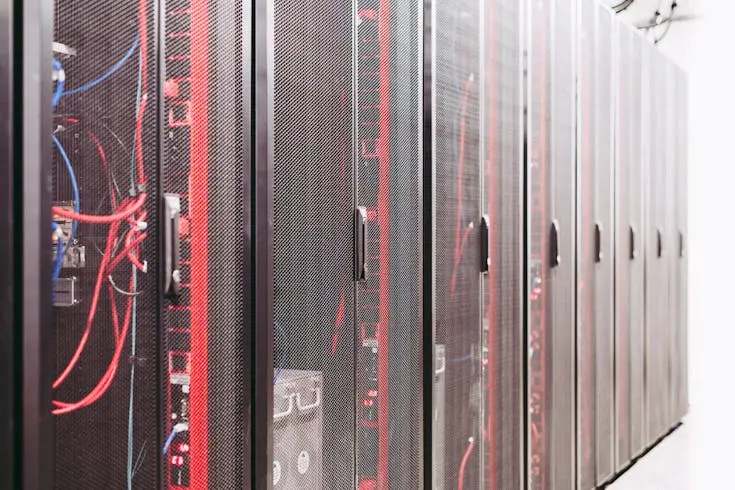
Indonesia’s data center market has reached approximately USD 2.39 billion (around IDR 38 trillion) as of 2025, supported by nearly 80 operational facilities and total capacity approaching 970 MW.
Growth remains strong, with annual expansion estimated between 14% and 20%, fueled by increasing cloud adoption, digital payments, and enterprise IT demand.
Colocation currently dominates the market, accounting for over 70% share, while hyperscale data centers are growing at over 20% CAGR due to AI, IoT, and cloud workloads.
From our experience advising foreign investors, this combination of strong demand and infrastructure gaps creates a high-return entry point, especially in Tier 3 and AI-ready facilities.
Key Drivers of the Industry
1. Digital Economy Expansion
Indonesia’s digital economy continues to surge, driven by e-commerce, fintech, and online services. This directly increases demand for cloud infrastructure and data processing capabilities.
Also read: Complete Guide to Indonesia’s Digital Economy
2. Cloud and AI Adoption
Global and regional cloud providers are localizing infrastructure in Indonesia to meet latency and compliance needs, particularly for AI-driven workloads.
3. Data Sovereignty Regulations
The implementation of the Personal Data Protection Law (UU PDP) and Government Regulation No. 71/2019 strengthens local data storage requirements, encouraging domestic data center development.
Regulatory Framework You Must Understand
Entering Indonesia’s data center market requires compliance with several key regulations:
- Government Regulation No. 71/2019: Governs electronic systems and data processing
- Personal Data Protection Law (UU PDP): Ensures data privacy and security
- Permenkomdigi No. 5/2025: Enforces stricter compliance and registration requirements
- PP 82/2012: Requires public service systems to host data locally
For public-sector systems, data must be stored within Indonesia, reinforcing demand for domestic infrastructure.
Best Locations for Data Centers in Indonesia
Greater Jakarta (Primary Hub)
- Holds over 56% market share
- Strong connectivity and demand concentration
Batam (Emerging Hotspot)
- Close proximity to Singapore
- Lower operational costs
- Growing at over 21% CAGR
West Java (Industrial Expansion)
- Strategic land availability
- Access to power and fiber networks
We often recommend Batam and West Java for new entrants due to scalability and cost efficiency.
Key Market Players
The industry is highly competitive, with both local and global players:
- DCI Indonesia (largest operator with over 100 MW capacity)
- BDx Indonesia (AI-ready campuses)
- Edgnex Data Centers (multi-billion USD investments)
The market remains fragmented, offering room for new entrants with niche or specialized offerings.
Challenges to Consider
Despite strong growth, there are critical challenges:
- Infrastructure gaps compared to Singapore and Malaysia
- High energy and cooling requirements
- Complex licensing and regulatory processes
These challenges often slow down foreign investors without local expertise.
How to Enter the Data Center Market in Indonesia
From our experience at InvestinAsia, successful entry typically involves:
- Establishing a PMA (foreign-owned company)
- Securing land and power supply agreements
- Ensuring compliance with PSE and data regulations
- Partnering with telecom and cloud ecosystem players
- Obtaining necessary permits and environmental approvals
Because regulatory and technical requirements are interconnected, a structured entry strategy is essential.
Why This Market Matters for Foreign Investors
Indonesia is still underpenetrated compared to regional peers, yet demand is accelerating rapidly.
This gap creates a unique opportunity to build scalable infrastructure aligned with AI, cloud, and digital economy growth.
How We Can Help You Enter Indonesia
At InvestinAsia, we help you navigate the entire process, from company setup and licensing to regulatory compliance and strategic market entry.
If you are planning to invest in Indonesia’s data center ecosystem, we can help you reduce risks and accelerate your expansion with a fully compliant structure.
FAQs
What is a data center?
A data center is a facility that houses servers, storage systems, and networking infrastructure to process and store digital data.
Is Indonesia a good market for data centers?
Yes. Strong digital growth, regulatory support, and rising cloud demand make Indonesia one of Southeast Asia’s fastest-growing markets.
Do foreign companies need local data centers?
Yes, especially for public services or regulated sectors, due to data localization requirements.
What is the biggest data center hub in Indonesia?
Greater Jakarta remains the primary hub, followed by emerging regions like Batam and West Java.
What regulations apply to data centers in Indonesia?
Key regulations include PP 71/2019, UU PDP, and Permenkomdigi No. 5/2025.
References
- https://presensi.perpusnas.go.id/press/1lgbhzh/perpusnas-data-center-construction-market-trends-and-growth-1767647786
- https://www.imarcgroup.com/indonesia-data-center-market
- https://www.mordorintelligence.com/market-analysis/data-centers/indonesia
- https://teknologi.bisnis.com/read/20250608/84/1883254/prospek-data-center-ri-menjanjikan-regulasi-dan-perizinan-jadi-tantangan
- https://www.kompas.id/artikel/en-valuasi-pasar-pusat-data-di-indonesia-sentuh-rp-38-triliun
- https://www.ap-lawsolution.com/actio/the-regulation-of-data-center-in-indonesia
- https://www.cisometric.com/articles/indonesias-data-center-requirements-implications-for-your-soc