If you want to invest in Indonesia’s plastic industry, the only legal and structured way is by establishing a PT PMA (foreign-owned company), securing licenses through the OSS RBA system, and complying with sector-specific regulations from institutions like BKPM and the Ministry of Industry. This process is clear but requires precision at every step.
Indonesia’s government, through institutions such as Bappenas, actively encourages investment in plastic manufacturing and recycling as part of its circular economy roadmap. According to official data, the country is still optimizing its recycling and production capacity, which opens opportunities for serious foreign investors.
Before diving deeper, you may want to explore a broader Overview of Plastic Industry in Indonesia to understand the context behind these opportunities.
Step 1: Determine Your Business Activity and KBLI Code
Start by defining your exact business model. This determines your KBLI (Indonesia Standard Industrial Classification) code.
Common plastic-related activities include:
- Plastic manufacturing (injection molding, packaging)
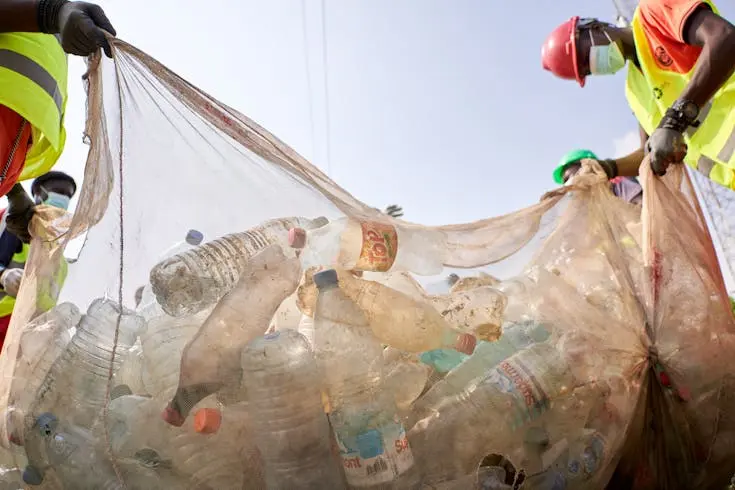
- Plastic recycling and waste processing
- Plastic-based product manufacturing
Choosing the correct KBLI is critical because it defines:
- Licensing requirements
- Foreign ownership limits
- Risk classification under OSS
This is also where insights from Plastic Industry Regulations in Indonesia: Compliance Guide for Foreign Investors become highly relevant.
Step 2: Check Foreign Ownership Eligibility
Not all sectors allow full foreign ownership. You must verify whether your plastic-related KBLI is:
- Fully open
- Partially restricted
- Requires a local partner
Indonesia has shifted toward a more open investment regime, but certain subsectors may still have conditions.
Step 3: Establish a PT PMA (Foreign-Owned Company)
To legally operate and generate revenue, you must set up a PT PMA.
Key requirements:
- Minimum total investment: IDR 10 billion
- Minimum paid-up capital: IDR 2.5 billion
- At least 2 shareholders
- Local registered address
This structure provides legal protection and full operational capability for foreign investors.
Also read: The Minimum Capital for Establishing PT PMA Company in Indonesia
Step 4: Register Your Business via OSS RBA
Indonesia uses a centralized system called OSS RBA (Online Single Submission – Risk-Based Approach).
Through OSS, you will obtain:
- NIB (Business Identification Number)
- Business licenses based on risk level
- Standard certifications
This system integrates all licensing processes into one platform, reducing bureaucracy and improving transparency.
Step 5: Secure Location and Zoning Approval
Your business location must comply with spatial planning regulations (RDTR).
You must ensure:
- The land is zoned for industrial use
- It aligns with manufacturing or recycling activities
This is why choosing the right area matters. You can explore Best Industrial Zones in Indonesia for Plastic Manufacturing Investments for deeper insights.
Step 6: Obtain Environmental Permits
Plastic-related businesses require environmental compliance.
Depending on your scale:
- UKL-UPL (standard environmental management)
- AMDAL (full environmental impact assessment)
This step is critical, especially for recycling operations. It also connects closely with Plastic Recycling in Indonesia: Challenges, Policies, and Investment Potential.
Step 7: Apply for Industry-Specific Licenses
After OSS registration, additional permits may include:
- Industrial Business License (IUI)
- Product certification (SNI if applicable)
- Waste management permits
Each license depends on your activity and risk classification.
Step 8: Fulfill Tax and Operational Compliance
Before operating, you must:
- Register for NPWP (tax ID)
- Set up accounting and reporting systems
- Submit investment activity reports
Indonesia has strengthened compliance monitoring under recent regulations, especially through OSS integration.
Step 9: Start Operations and Maintain Compliance
Once all licenses are complete:
- Begin production or operations
- Maintain periodic reporting
- Ensure ongoing compliance with environmental and industrial standards
Non-compliance can lead to administrative sanctions under updated investment regulations.
Setting up a plastic business in Indonesia involves multiple regulatory layers, from KBLI classification to OSS licensing and environmental approvals.
That is why many foreign investors choose professional assistance.
As explained in How InvestinAsia Simplifies the PT PMA Incorporation Journey, we streamline every step from company registration to full operational readiness.
With our PT PMA Company Registration Services, we help you:
- Choose the correct KBLI
- Set up your PT PMA efficiently
- Handle OSS licensing and permits
- Ensure full compliance with Indonesian regulations
Start your investment journey here: Indonesia PT PMA Company Registration Services for Foreigners
FAQs
What is the first step to invest in Indonesia’s plastic industry?
Define your business activity and select the correct KBLI code.
Do foreign investors need a local partner?
Not always. It depends on the specific sub-sector and ownership restrictions.
What is the minimum investment for a PT PMA?
The minimum total investment is IDR 10 billion, with at least IDR 2.5 billion paid-up capital.
Is OSS mandatory for licensing?
Yes. All business licensing in Indonesia is processed through the OSS RBA system.
Are environmental permits required?
Yes. Plastic businesses must comply with environmental regulations such as UKL-UPL or AMDAL.
References
- https://www.bappenas.go.id/berita/bappenas-gggi-inisiasi-kebijakan-investasi-di-sektor-industri-daur-ulang-perkuat-rantai-nilai-plastik-berkelanjutan-TzZXa
- https://oss.go.id/en/regulasi
- https://www.mondaq.com/inward-foreign-investment/1712280/new-indonesian-investment-rules-2025
- https://news.valqis.co.id/panduan-perizinan-pt-pma-untuk-industri-furnitur-plastik-logam/