Indonesia’s plastic industry is one of Southeast Asia’s most compelling investment frontiers. Valued at USD 7.84 billion in 2024 and projected to reach USD 14.03 billion by 2033 at a CAGR of approximately 6%, the market draws strength from a population of 280 million, accelerating urbanization, booming e-commerce, and strong downstream demand across packaging, automotive, and construction. For foreign investors, this industry offers multiple regulated entry points — from resin production and flexible packaging to plastic recycling and bioplastics — each backed by an increasingly investor-friendly legal framework governed by Indonesia’s Ministry of Investment (BKPM) and the Ministry of Industry (Kemenperin).
In this guide, we at InvestinAsia walk you through everything you need to know: market conditions, growth drivers, regulatory environment, government initiatives, key players, and the business opportunities most relevant to foreign capital.
Market Size and Growth Trajectory
Indonesia’s plastics market stands at approximately 8.6 million tons in 2025, forecast to reach 13.2 million tons by 2033, growing at a CAGR of 5.5%. In revenue terms, IMARC Group places the 2024 market at USD 7.84 billion, rising to USD 14.03 billion by 2033. Multiple independent forecasters — including Mordor Intelligence, GMI Research, and MarkNtel Advisors — converge on a 5–6.5% CAGR range through 2030, confirming sustained structural momentum rather than a cyclical spike.
The plastic packaging sub-segment is particularly dynamic. The Indonesia plastic packaging market is valued at USD 10.47 billion in 2025 and is projected to reach USD 14.45 billion by 2030 at a CAGR of 6.65%. Within packaging, flexible formats account for 54% of revenue, and food and beverage applications alone represent nearly 70% of total plastics usage across the country.
Indonesia’s GDP grew at 4.87% year-on-year in Q1 2025, according to BPS-Statistics Indonesia. That macroeconomic stability underpins capital formation and consumer spending, both of which feed directly into plastics demand across sectors.
Key Demand Drivers
Urbanization and population growth
More than 60% of Indonesia’s population is expected to reside in urban areas by 2025. Urban living increases consumption of packaged goods, construction materials (PVC pipes, insulation, conduit), and consumer electronics — all plastic-intensive product categories.
E-commerce expansion
Indonesia’s digital marketplace recorded unprecedented parcel volumes in 2024. Tokopedia data indicates that 68% of fashion SMEs adopted polyethylene or polypropylene mailers that year for last-mile delivery. This surge in logistics packaging is a structural demand driver with no reversal in sight. We explore this theme in depth in our dedicated article on the E-commerce Boom and Its Impact on Plastic Packaging Demand in Indonesia.
Also read: Indonesia Ecommerce Industry Growth: Market Reality and Investment Outlook
Automotive growth
Indonesia produced 1.2 million vehicles in 2024. The government targets 2 million annual car sales by 2030. The average vehicle contains 150–200 kg of plastic components, meaning automotive production alone will generate hundreds of thousands of additional tons of resin demand annually through the decade.
Also read: Automotive Industry in Indonesia: Opportunities and Outlook
Infrastructure development
Government-backed infrastructure programs drive sustained demand for PVC pipes, plastic conduit, geomembranes, and insulation materials. The RPJMN 2025–2029 continues this capital allocation, particularly across Java, Sumatra, and Kalimantan.
Rising middle class
Growing middle-class purchasing power increases per capita sachet and single-serve packaging consumption. Wings Group and Mayora Indah, two domestic consumer goods giants, have expanded flexible packaging lines — lifting LDPE and polypropylene film volumes and creating consistent demand for resin converters.
Resin and Product Segmentation
By resin type, traditional plastics hold 74.56% of market share in 2024. Polyethylene (PE) leads in volume for flexible films, shopping bags, and agricultural sheets. Polypropylene (PP) is the fastest-growing segment in rigid packaging and automotive trim. PVC aligns with infrastructure roll-outs. PET is accelerating in bottle-to-bottle recycling applications.
By processing technology, injection molding accounts for 46.13% of the market, followed by extrusion and blow molding. By end application, packaging captures 44.10% of market size and is expanding at 5.23% CAGR through 2030.
Bioplastics currently occupy a small but high-growth niche, projected to advance at 6.08% CAGR to 2030, supported by government green industry mandates and growing brand-level sustainability commitments.
Competitive Landscape and Market Leaders
The Indonesian plastics market features moderate fragmentation, with a tier of large integrated producers dominating upstream capacity and a broad base of converters and packaging manufacturers downstream.
PT Chandra Asri Petrochemical is Indonesia’s dominant domestic petrochemical producer, controlling a majority of olefins and polyolefins output. The company benefits from captive feedstock and state support, and its integrated supply chain positions it as a price-setter in PE and PP resins.
PT Lotte Chemical Indonesia (LCI) represents the country’s largest single foreign investment in plastics. LCI’s Cilegon, Banten complex — a USD 4 billion facility — inaugurated new production lines in November 2025, with annual capacity of 520,000 tons of propylene and 350,000 tons of polypropylene. This project alone is expected to push Indonesia close to 90% ethylene self-sufficiency.
Other significant players include Asahimas Chemical (chlor-alkali and VCM/PVC), Polychem Indonesia, BASF SE, LyondellBasell, Toray International Indonesia, and PT ALBA Tridi Plastics Recycling Indonesia — the latter operating a USD 44.2 million ADB-financed PET recycling facility in Central Java.
PT Amandina Bumi Nusantara became in 2024 the first Indonesian converter to achieve SNI 8424:2017 food-grade rPET compliance, processing 3,000 tons per month of recycled PET for beverage brands including Coca-Cola Indonesia.
For foreign market entrants, the competitive landscape means that upstream resin production requires significant capital and faces entrenched state-linked competition. However, downstream conversion, specialty packaging, recycling technology, and bioplastics represent areas where foreign capital can capture meaningful market share without competing head-to-head with Chandra Asri or Pertamina.
Regulatory Framework
Understanding Indonesia’s regulatory environment is non-negotiable for any foreign investor. The key legislative pillars are:
Law No. 3 of 2014 on Industry
As amended by Law No. 6 of 2023 (Omnibus Law), Law No. 3 of 2014 on Industry provides the overarching framework for industrial development, licensing, and standard-setting.
Government Regulation No. 20 of 2024 on Industrial Zoning (Perwilayahan Industri)
Issued May 7, 2024, replacing PP No. 142 of 2015 — governs the development of Industrial Growth Centers (WPPI), Industrial Allocation Zones (KPI), Industrial Estates, and Small and Medium Industry Clusters. This regulation directly affects where plastic manufacturers can legally establish facilities and access industrial infrastructure.
Presidential Regulation No. 74 of 2022 on National Industrial Policy 2020–2024
Sets strategic priorities for Indonesia’s industrial sectors, including chemicals and petrochemicals. Indonesia’s next industrial policy roadmap under the Prabowo administration is expected to continue petrochemical downstream development as a priority.
MoEF Regulation P.75/2019 on Waste Reduction Roadmap by Producers
Assigns extended producer responsibility (EPR) obligations to manufacturers of plastic packaging. Producers must plan, implement, and report on waste reduction — a compliance requirement that creates both cost obligations and recycling investment incentives.
Presidential Regulation No. 83 of 2018 on Marine Debris Management
Commits Indonesia to reducing marine plastic pollution by 70% by 2025, with targets managed jointly by Kemenperin and KLHK.
BKPM Regulation No. 5 of 2025
Effective October 2, 2025, BKPM Regulation No. 5 of 2025 is the most recent and impactful change for foreign investors. It reduces the minimum paid-up capital for a PT PMA (foreign-owned limited liability company) from IDR 10 billion to IDR 2.5 billion (approximately USD 150,000), while retaining the minimum total investment value of more than IDR 10 billion per business activity code (KBLI). The regulation also introduces new quarterly LKPM reporting obligations and a 12-month lock-up on paid-up capital for certain sectors.
We cover the compliance dimensions of these regulations in dedicated detail in our article: Plastic Industry Regulations in Indonesia: Compliance Guide for Foreign Investors.
Government Initiatives and Policy Direction
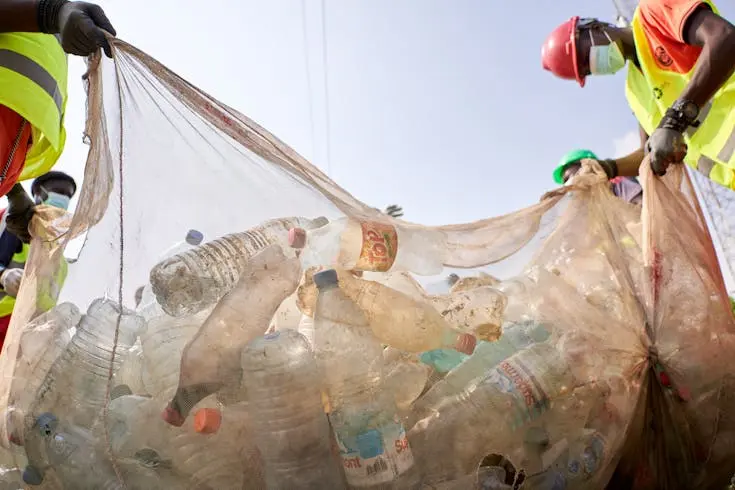
Indonesia’s government has moved from reactive waste management toward a proactive circular economy agenda, creating both obligations and investment signals for foreign players.
National Roadmap and Action Plan Circular Economy Indonesia 2025–2045
Launched by the government in July 2024, identifies plastic packaging in retail as one of five priority sectors. The roadmap’s first milestone (2025–2029) focuses on building ecosystems for redesign, reuse, and collection of packaging waste. By 2040, the target is complete elimination of unnecessary plastic waste through circular economy transition. This roadmap provides a 20-year investment signal for recycling, bio-based materials, and waste infrastructure.
Kemenperin circular economy support
Includes: SNI standards for food-grade recycled PET (SNI 8424:2017); incentives in the form of VAT reductions for plastic recycling industries; technical guidance on PET recycling for food packaging; and the development of small-scale plastic waste processing units (IKM-level recycling clusters). Kemenperin confirms there are currently approximately 241 plastic recycling industries in Indonesia, with total investment of approximately IDR 20 trillion and production capacity of 2.54 million tons per year.
Green Industry Regulation and ESG alignment
Kemenperin has established a Green Industry regulatory framework requiring more efficient and environmentally compliant production methods. This aligns with the ESG mandates increasingly required by international investors, development finance institutions, and global brand partners.
Anti-dumping duties on imported PP
In February 2025, the Indonesian Anti-Dumping Committee (KADI) proposed duties on polypropylene copolymer imports from five countries. This move protects domestic resin producers and signals that the government is actively supporting local production — a positive investment signal for manufacturers considering domestic resin sourcing strategies.
Investment Opportunities for Foreign Investors
Indonesia’s plastic sector offers several distinct opportunity windows for foreign capital:
1. Plastic packaging manufacturing
Flexible packaging — pouches, films, mailers, shrink wrap — remains undersupplied relative to e-commerce and FMCG demand growth. Foreign investors with packaging technology or sustainable film expertise can establish downstream converting operations with strong off-take visibility.
2. PET recycling and rPET production
Indonesia generates approximately 10 million tons of plastic waste annually, of which only 39% is properly managed. The ADB-backed ALBA Tridi facility and the Veolia-Danone AQUA recycling plant are early movers. The government’s EPR framework, SNI food-grade rPET standard, and NPAP targets create a policy-driven demand for certified recycled pellets. International recycling technology providers and operators have a genuine advantage here. We analyze this opportunity in detail in our article: Plastic Recycling in Indonesia: Challenges, Policies, and Investment Potential.
3. Specialty and engineering resins
Indonesia remains heavily import-dependent for specialty resins — engineering grades, barrier materials, bioplastics. Foreign producers or compounders serving automotive, electronics, and medical sectors can leverage Indonesia’s import-dependence to establish local compounding or distribution operations.
4. Bioplastics and sustainable materials
The bioplastics segment is at an early but fast-growing stage. Government green industry mandates, global brand sustainability commitments, and single-use plastic restrictions create first-mover advantages for companies with bio-based or compostable material technologies.
5. Waste-to-energy and plastic waste processing
The gap between plastic waste generated and waste properly managed creates infrastructure investment opportunities in collection, sorting, pelletizing, and energy-from-waste projects — often eligible for concessional finance through development banks.
For context on how to structure your market entry, we recommend reading our complementary articles: Best Industrial Zones in Indonesia for Plastic Manufacturing Investments and How to Invest in Indonesia’s Plastic Industry: Entry Modes and Legal Structures.
Challenges and Risk Factors
No investment landscape is without friction. Foreign investors in Indonesia’s plastic sector should account for the following:
Raw material import dependency
Despite LCI’s new Cilegon complex, Indonesia still depends on imported feedstock for specialty resins and certain engineering grades. Currency volatility in the rupiah directly affects resin costs — in early 2025, rupiah weakness pushed spot PE prices up approximately 12% in local terms within a single quarter.
Single-use plastic regulations and levy risk
Indonesia has been developing an excise tax on plastic products since 2020. Although implementation has been delayed, it remains a regulatory risk. The environment ministry also targets a 30% cut in packaging waste by 2029, accelerating the shift from single-use to recyclable mono-materials and affecting product design decisions.
Regulatory complexity for new entrants
Navigating KBLI codes, OSS-RBA licensing, NIB permits, sectoral approvals from Kemenperin and KLHK, and LKPM quarterly reporting is operationally demanding for first-time investors in Indonesia. Errors in KBLI selection at incorporation stage can create downstream licensing problems.
Competitive moat of state-linked producers
Chandra Asri and Pertamina benefit from state support, captive feedstock, and logistics advantages. Foreign entrants targeting upstream petrochemicals will face these structural barriers. Downstream conversion and specialty applications are more accessible.
Establishing Your Presence: The PT PMA Path
The standard legal vehicle for foreign investors in Indonesia’s manufacturing sector is the PT PMA (Perseroan Terbatas Penanaman Modal Asing), a foreign-owned limited liability company regulated by BKPM. Under the current BKPM Regulation No. 5 of 2025, the framework for establishing a PT PMA in Indonesia’s plastic sector is more accessible than at any previous point:
The minimum paid-up capital has been reduced to IDR 2.5 billion (approximately USD 150,000). The total investment value commitment per business activity (KBLI) remains at more than IDR 10 billion (approximately USD 600,000), excluding land and buildings. Foreign investors must select the correct KBLI codes relevant to their specific plastic manufacturing or recycling activity at the point of incorporation — a step where precision matters greatly.
Depending on the KBLI selected, plastic manufacturing businesses may be 100% foreign-owned or subject to partial domestic partnership requirements, as defined in Indonesia’s current Positive Investment List (Presidential Regulation No. 10 of 2021). The OSS-RBA (Online Single Submission — Risk Based Approach) system processes most business licensing, though sectoral approvals from Kemenperin remain required for certain industrial categories.
We walk through this incorporation process end-to-end in our article: How InvestinAsia Simplifies the PT PMA Incorporation Journey.
If you are ready to explore whether Indonesia’s plastic sector fits your investment strategy, our team at InvestinAsia provides complete support — from pre-investment feasibility guidance and KBLI mapping to full PT PMA registration, tax compliance setup, and ongoing reporting.
Learn more about our PT PMA Company Registration Services
Frequently Asked Questions
Is the plastic manufacturing sector open to 100% foreign ownership in Indonesia?
Many sub-sectors within plastic manufacturing and recycling are open to 100% foreign ownership under Presidential Regulation No. 10 of 2021 (the Positive Investment List). However, certain activities may require local partnership or are subject to sector-specific caps. KBLI code selection at incorporation determines the applicable foreign ownership rules. We recommend obtaining a specific eligibility review before registration.
What is the minimum investment required to establish a plastic manufacturing PT PMA?
Under BKPM Regulation No. 5 of 2025, the minimum paid-up capital is IDR 2.5 billion (approximately USD 150,000). The total investment value per business activity code (KBLI) must exceed IDR 10 billion (approximately USD 600,000), excluding land and buildings. These requirements apply per KBLI, so companies with multiple business lines may need to account for multiple investment thresholds.
What environmental permits does a plastic manufacturer need in Indonesia?
Depending on scale and process type, plastic manufacturers typically require an Environmental Approval (Persetujuan Lingkungan), which replaces the former AMDAL or UKL-UPL under the Omnibus Law framework. Producers of plastic packaging are also subject to the EPR obligations under MoEF Regulation P.75/2019, requiring a waste reduction roadmap submission. Large producers must register as part of the SIPSN waste reporting system.
Which industrial zones are best suited for plastic manufacturing in Indonesia?
Java dominates current plastic manufacturing, with key clusters in Cilegon (Banten), Karawang (West Java), Surabaya (East Java), and Greater Jakarta. However, PP No. 20 of 2024 on Industrial Zoning supports new industrial estate development outside Java, including in Batam, Kendal (Central Java), and sites in Kalimantan. The choice of zone affects access to feedstock logistics, labor costs, port connectivity, and tax incentives. We explore these options in our article: Best Industrial Zones in Indonesia for Plastic Manufacturing Investments.
What is Indonesia’s policy direction on plastic recycling investment?
The government’s National Circular Economy Roadmap 2025–2045 and the NPAP framework signal strong long-term policy support for plastic recycling. Kemenperin provides VAT incentives for recycling industries, and the SNI 8424:2017 standard enables food-grade rPET to access premium market contracts. The ADB’s USD 44.2 million blue loan to ALBA Tridi in December 2024 demonstrates international development finance appetite for Indonesia recycling projects.
How long does PT PMA registration take in Indonesia?
Under the OSS-RBA system and BKPM Regulation No. 5 of 2025, the base process takes approximately 10 working days for standard business activities, though the full timeline including sectoral permits, NIB issuance, and bank account setup typically runs 4–8 weeks depending on business complexity. Working with an experienced incorporation partner shortens this significantly.
Data Sources and References
- Kementerian Perindustrian — Circular Economy and Plastic Recycling Industry Support: https://kemenperin.go.id/artikel/23626/ghs
- Kementerian Perindustrian — PET Plastic Recycling Plant Inauguration: https://kemenperin.go.id/artikel/22621/Menperin-Resmikan-Pabrik-Daur-Ulang-Plastik-Terbesar-di-Indonesia-
- Peraturan BPK — PP No. 20 Tahun 2024 tentang Perwilayahan Industri: https://peraturan.bpk.go.id/Details/285219/pp-no-20-tahun-2024
- Kementerian Lingkungan Hidup — Plastic Pollution and Circular Economy Targets 2025: https://kemenlh.go.id/news/detail/hlh-2025-anak-muda-bicara-polusi-plastik-harus-segera-berakhir
- Kementerian Perindustrian — National Plastic Action Partnership: https://kemenperin.go.id/artikel/20410/Diskusi-National-Plastic-Action-Partnership
- IMARC Group — Indonesia Plastics Market Size & Forecast 2025–2033: https://www.imarcgroup.com/indonesia-plastics-market
- Mordor Intelligence — Indonesia Plastics Market Analysis (Sep 2025): https://www.mordorintelligence.com/industry-reports/indonesia-plastics-market
- Mordor Intelligence — Indonesia Plastic Packaging Market (Jan 2026): https://www.mordorintelligence.com/industry-reports/indonesia-plastic-packaging-market
- Switch-Asia — Plastic Policies in Indonesia Country Profile: https://www.switch-asia.eu/site/assets/files/4409/plastic_policies_id.pdf
- Indonesia Business Post — Plastic Industry Investment Update 2024: https://indonesiabusinesspost.com/2766/investment-and-risk/plastic-industry-investment-worth-us2708-billion-postponed-over-new-regulation