Indonesia’s recycling industry presents a high-growth opportunity driven by rising waste generation, regulatory pressure, and circular economy initiatives led by institutions like the Ministry of Environment and Forestry (KLHK) and Bappenas. Despite generating over 34 million tons of waste annually, only around 60% is properly managed, leaving a massive gap for recycling businesses and investors.
This gap is exactly where foreign investors can find scalable, high-impact opportunities.
Market Size and Current Conditions
Indonesia is one of Southeast Asia’s largest waste generators, with total waste estimated to exceed 60 million tons annually when including unreported regions.
However, the recycling rate remains relatively low:
- Less than 25% of total waste is recycled
- Plastic recycling rate is only around 10%
- Recycling industry processes only about one-third of plastic waste capacity
This imbalance highlights a structural inefficiency: supply of recyclable waste is abundant, but processing capacity is still limited.
From an investment perspective, this indicates a supply-rich, infrastructure-poor market, which is ideal for early movers.
Key Recycling Segments with High Potential
1. Plastic and Packaging Waste
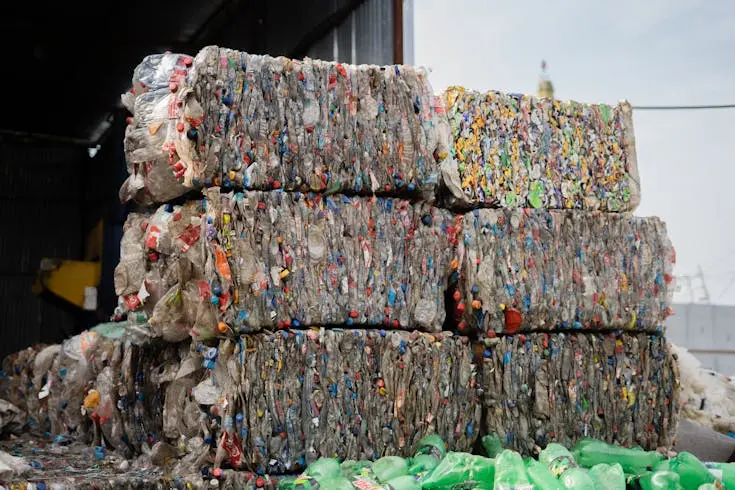
Plastic remains the largest opportunity, with nearly 20 million tons generated annually.
However, poor sorting systems limit recyclability.
2. Textile Recycling
Indonesia’s textile industry generates over 572 kilotons of polyester waste annually, with limited closed-loop recycling systems.
This creates opportunities in:
- Fiber-to-fiber recycling
- Industrial waste recovery
3. E-Waste Recycling
E-waste is projected to reach 3.2 million tons by 2040, with a potential economic value of up to USD 14 billion.
4. Waste-to-Energy (WtE)
Government-backed waste-to-energy projects are accelerating, converting landfill waste into electricity.
Role of the Informal Sector
One unique aspect of Indonesia’s recycling ecosystem is the dominance of the informal sector.
Waste pickers and collectors form the backbone of material recovery, often replacing formal collection systems.
This creates both:
- Efficiency in collection
- Challenges in standardization and scalability
For deeper insights, you can explore: The Role of the Informal Waste Sector in Indonesia’s Recycling Ecosystem
Government Regulations and Policies
Indonesia is actively strengthening its regulatory framework to support recycling and sustainability.
Key Policies:
- Extended Producer Responsibility (EPR): Forces producers to manage product lifecycle
- Waste Management Law (UU No. 18/2008)
- Presidential Regulations on waste-to-energy projects
- National Waste Management Information System (SIPSN) integration
The government is also aligning policies with circular economy principles.
For a broader policy context, see:
- Circular Economy in Indonesia: Government Initiatives and Business Opportunities
- Indonesia Climate Policies and Their Impact on Sustainable Investments
Infrastructure and Ecosystem Development
Indonesia has around 872 recycling centers, with concentration in Java, particularly West Java.
Recent developments include:
- Standardized waste data systems (Bappenas-led integration)
- Growing private sector involvement
- Emergence of food-grade recycling facilities (e.g., Danone–Veolia)
However, challenges remain:
- Lack of advanced sorting technology
- Limited downstream processing capacity
- Fragmented logistics
Key Challenges in the Industry
Despite its potential, the recycling industry faces structural barriers:
- Low waste segregation at source
- Heavy reliance on informal sector
- Limited recycling technology
- Regulatory enforcement gaps
- Contamination in recyclable materials
These challenges create barriers, but also entry opportunities for technology-driven investors.
Business Opportunities for Foreign Investors
Indonesia offers strong fundamentals for foreign investment in recycling:
- Plastic recycling plants
- Waste-to-energy facilities
- Industrial recycling (textile, e-waste)
- Recycling technology and automation
- Circular supply chain solutions
Foreign investors can enter through a PT PMA (foreign-owned company), which allows full or majority foreign ownership depending on sector classification.
If you are exploring entry strategies, you may also read: How to Start a Recycling Business in Indonesia
How We Help You Enter the Market
At InvestinAsia, we work closely with foreign investors to navigate Indonesia’s regulatory and operational landscape.
Setting up a recycling business involves:
- Business classification (KBLI alignment)
- OSS licensing and environmental permits
- Investment structuring
We simplify the entire process, as explained in: How InvestinAsia Simplifies the PT PMA Incorporation Journey
Start your expansion here: Indonesia PT PMA Company Registration for Foreigners
FAQs
What is the recycling rate in Indonesia?
Indonesia recycles less than 25% of its total waste, with plastic recycling at around 10%.
Why is Indonesia’s recycling industry attractive?
High waste volume, low processing capacity, and strong government support create significant growth potential.
What sectors have the highest recycling opportunities?
Plastic, textile, e-waste, and waste-to-energy sectors offer the most promising investment potential.
Can foreigners invest in recycling businesses in Indonesia?
Yes, through a PT PMA structure, which allows foreign ownership under Indonesia’s investment regulations.
What are the main challenges in the recycling industry?
Challenges include poor waste segregation, limited infrastructure, and reliance on the informal sector.
References
- https://databoks.katadata.co.id/en/environment/statistics/6879e64c06730/40-of-indonesian-waste-unmanaged-in-2024
- https://business-indonesia.org/waste_management
- https://journals.sagepub.com/doi/10.1177/0734242X241242697
- https://www.mdpi.com/2313-4321/11/3/62
- https://en.antaranews.com/news/205849/plastic-paper-waste-hold-vast-potential-for-recycling-industry-govt
- https://www.ibai.or.id/news/item/1128-recycling-industry-processing-just-one-third-of-nation-s-waste-govt.html