

An APEC lane is a dedicated fast-track immigration channel set aside for APEC Business Travel Card (ABTC) holders at international airports across the Asia-Pacific region, letting cardholders bypass the standard queue on both arrival and departure. Some travelers search for this as an “APEC line airport,” but the correct term is APEC lane, since the two sound similar when an officer calls it out or announces it over the terminal speakers.
Key Takeaways
- Not every APEC economy signposts a dedicated APEC lane airport counter. Some, including the United States and Canada, only offer crew or diplomatic lanes to ABTC holders.
- As of 2026, Indonesian ABTC applications are filed entirely online through abtc.imigrasi.go.id, and the card exists only in digital form. Printing a physical card is no longer permitted.
- You can use the APEC lane at any participating airport even if that country has not yet finished pre-clearing your application, as long as your home economy has issued the card.
What Counts as an APEC Lane at the Airport?
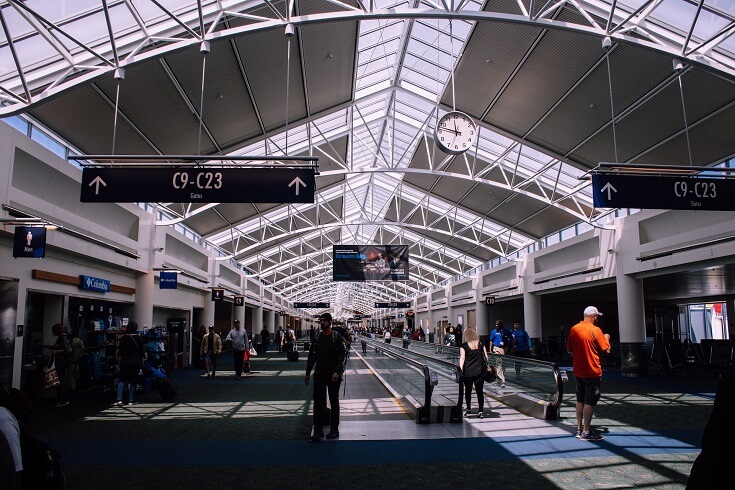
An ABTC airport lane is not a single universal standard. Each economy in the scheme decides how to implement it, which is why the experience varies so much between, say, Bangkok and Toronto. In fully participating economies, the lane is usually signposted, sits at the far end of the immigration hall, and is shared with returning residents or aircrew. In transitional economies, primarily the United States and Canada, cardholders use lanes designated for aircrew instead, since those two economies do not fully participate in the pre-clearance side of the scheme.
This is also where the misspelling comes in. People type “apec line airport” into Google expecting to find the same thing, since lane and line get confused easily in everyday speech. If that is how you landed here, you are in the right place: the lanes below are what you are looking for.
ABTC Airport List: Which Countries Have an Exclusive Lane
Below is the current ABTC airport list by economy, current as of 2026. Airport names and terminal assignments occasionally change when a country opens a new terminal or renames a facility, so treat this as a planning reference and confirm signage on arrival if you’re using an airport for the first time.
| Economy | Airports with an APEC lane |
|---|---|
| Australia | Adelaide, Brisbane, Cairns, Darwin, Melbourne, Perth, Sydney |
| Brunei Darussalam | Brunei International Airport |
| Canada (transitional) | Vancouver, Edmonton, Calgary, Winnipeg, Toronto Pearson (Terminals 1 and 2), Ottawa, Montreal, Halifax, using crew-designated lanes rather than a separate APEC counter |
| Chile | Santiago International Airport |
| China | Beijing Capital International Airport, Shanghai Pudong International Airport |
| Hong Kong, China | Hong Kong International Airport, plus selected ferry terminals and land crossings |
| Indonesia | Soekarno-Hatta (Jakarta), Ngurah Rai (Bali), Juanda (Surabaya), and Batam’s international checkpoints. Most domestic-international airports outside these hubs do not have a separate lane. |
| Japan | Narita, Haneda (Tokyo), Kansai (Osaka), Chubu Centrair (Nagoya) |
| Korea | Incheon International Airport (Seoul) |
| Malaysia | Kuala Lumpur International Airport (KLIA and KLIA2), Penang International Airport, Sultan Iskandar Building (Johor Bahru), and the Second Link crossing at Gelang Patah |
| Mexico | Major international airports, using lanes normally reserved for aircrew where a dedicated APEC counter is not signposted |
| New Zealand | Auckland, Christchurch, Wellington |
| Papua New Guinea | Jackson International Airport (Port Moresby) |
| Peru | Jorge Chávez International Airport (Lima) |
| Philippines | Ninoy Aquino International Airport (Manila) |
| Russia | Major international airports; only the physical card is currently accepted, not the virtual version |
| Singapore | Changi Airport, in a lane shared with citizens and permanent residents |
| Chinese Taipei | Taoyuan International Airport (Taipei), Kaohsiung International Airport |
| Thailand | Suvarnabhumi (Bangkok), Phuket, Chiang Mai. Bangkok also runs an expedited security screening lane for ABTC holders on top of the immigration lane. |
| United States (transitional) | Major international airports, using aircrew lanes; ABTC holders still clear standard visa or ESTA requirements |
| Vietnam | Tan Son Nhat (Ho Chi Minh City), Noi Bai (Hanoi) |
Two things worth flagging here that most airport lists skip. First, Japan’s list includes Haneda, not just Narita, which matters if your flight lands in Tokyo’s more central airport rather than Narita. Second, Malaysia’s coverage now extends past Kuala Lumpur to Penang and the two Johor land crossings into Singapore, according to the Immigration Department of Malaysia. If you’re only checking KLIA, you might miss that the same privilege applies at land border crossings too.
Also read: APEC Business Travel Card Participating Countries List
What Happens if a Country Hasn’t Pre-Cleared You Yet?
This is the part of the ABTC scheme most cardholders never learn, and it changes how you should think about the airport list above. Fast-track lane access and pre-clearance are two separate benefits. Pre-clearance, which waives the need for a visa, only applies to the economies printed on the back of your card. But the fast-track lane itself is different: once your home economy has issued your ABTC, you are entitled to use the APEC lane at any participating airport, even in economies that have not finished processing your pre-clearance.
In practice this means a newly issued cardholder waiting on approvals from three or four slower economies can still walk into the APEC lane everywhere else. The catch is that not every immigration officer knows this rule, and there are scattered reports of officers turning cardholders away from the fast-track line because a particular economy wasn’t listed on the card. If that happens, the polite move is to comply and use the regular line rather than argue at the counter.
Can You Bring a Companion Through the APEC Lane?
Officially, the ABTC is issued to one person and the fast-track privilege applies to that person alone. In practice, enforcement is inconsistent from one airport to the next. Cardholders have reported bringing a travel companion through the priority lane without issue in Malaysia, Indonesia, and Thailand, while Japan tends to require every traveler, including family members, to hold their own card. China has produced mixed outcomes depending on the individual officer on duty.
If you’re planning to bring someone along, don’t count on it. Immigration officers are within their rights to send a non-cardholder to the regular queue, and pushing the issue rarely goes well.
How Has ABTC Airport Access Changed for Indonesian Citizens in 2026?
Indonesia’s Directorate General of Immigration moved the entire ABTC application process onto a dedicated online platform, abtc.imigrasi.go.id, in early 2026. This replaced the older system of physical document submission and email correspondence, and it applies to new applications, renewals, and data updates alike.
The bigger shift is that the card itself is now issued only in digital form. Indonesian regulations explicitly prohibit printing a physical ABTC, so cardholders present the app-based version at the airport rather than a plastic card. This lines up with APEC’s broader push toward the virtual ABTC across the region, though not every economy has made the same switch, and Russia still only accepts the physical card.
For business travelers who built a routine around handing over a physical card at the APEC lane, this is worth planning around before your next trip. Make sure the app is installed and logged in well before departure, since a dead phone battery at immigration is a worse problem than a misplaced wallet card ever was.
Also read: APEC Business Travel Card Requirements: A Complete Guide
Not Sure Your Documents Meet the New Digital Requirements?
InvestinAsia’s dedicated APEC team handles the abtc.imigrasi.go.id submission end to end, so a formatting error doesn’t cost you months of preclearance time.
Is the APEC Lane the Same as a Security Fast-Track?
Not usually. Most APEC lanes only cover immigration, the passport and entry stamp process, not the security screening you go through before reaching the gate. Bangkok is a documented exception. Suvarnabhumi Airport runs a separate expedited security lane for ABTC holders on top of the immigration lane, which is unusual enough that frequent travelers specifically call it out. Don’t assume the same applies elsewhere unless you’ve confirmed it, since assuming it does and then rushing to the wrong queue can cost you more time than it saves.
Also read: Can I Use an APEC Business Travel Card for Personal Travel?
What Should You Do if the Airport Doesn’t Recognize the APEC Lane?
Signage inconsistency is a real problem at some airports, particularly ones where the APEC counter shares space with several other priority schemes. A traveler at Kuala Lumpur International Airport once described being sent in three different directions by three different staff members before finding the right carpet marking. If you can’t locate the lane:
Tips from InvestinAsia’s team on navigating unfamiliar airports:
- Look for signage near the far end of the immigration hall rather than the main flow of passengers, since APEC lanes are rarely placed front and center.
- Ask an airport staff member specifically for the “APEC lane” or “business travel card lane” rather than “fast lane,” which can get you redirected to an unrelated priority queue.
- If a self-service e-gate looks faster than the staffed APEC counter, be cautious. Some e-gates reject ABTC scans outright, which sends you back to the end of a different line.
Also read: APEC Business Travel Card vs Business Visa: Key Differences Explained
How Do You Get the Most Out of ABTC Airport Lanes?
From what InvestinAsia’s consultants see with clients who travel frequently across APEC economies, the biggest time savings come from planning routes around airports with confirmed lanes rather than assuming every international airport in a member country has one. Indonesia is a good example: Soekarno-Hatta and Ngurah Rai have exclusive lanes, but a domestic-international connection through a smaller regional airport might not.
Notes from InvestinAsia Consultants
Clients renewing their ABTC often assume the fast-track lane disappears the moment the card expires, which isn’t quite right. If your renewal is in progress and you’re still holding a valid card, the lane privilege stays active until the expiry date printed on it. The confusion usually comes from mixing up card expiry with pre-clearance status, which are tracked separately by each economy.
Business travelers who rely on the ABTC for recurring trips to Malaysia, Thailand, or China tend to build a habit of checking their current pre-clearance list on the ABTC status tracker before booking a new route, since a country can be added to the list mid-cycle without any notification beyond the tracker itself.
Also read: Limitations of the APEC Business Travel Card You Should Know
Applying for or Renewing an ABTC as an Indonesian Citizen
For Indonesian directors, commissioners, and senior executives who travel to APEC economies regularly, getting the airport lane access right starts with getting the application right. Since the process now runs entirely through Indonesia’s online portal, incomplete uploads or mismatched company documents are the most common reason applications stall before they ever reach the pre-clearance stage with other economies.
Through InvestinAsia’s APEC Business Travel Card application service, our team reviews eligibility, prepares the document set against current Immigration requirements, and tracks pre-clearance progress across the economies you actually travel to, so a single missing bank reference letter doesn’t delay your entire application by months.
Also read: APEC Business Travel Card Renewal: Requirements and Process in Indonesia
Ready to Skip the Immigration Queue on Your Next Business Trip?
InvestinAsia’s dedicated APEC team, backed by 380+ in-house specialists, handles your application from document prep through pre-clearance follow-up.
- Asia-Pacific Economic Cooperation Secretariat. (2026). APEC Business Travel Card (ABTC and virtual ABTC). Retrieved from
https://www.apec.org/what-we-do/committee-on-trade-and-investment/business-mobility-group/apec-business-travel-card-abtc-and-virtual-abtc - Immigration Department of Malaysia. (2026). APEC Business Travel Card: Introduction. Retrieved from
https://www.imi.gov.my/index.php/en/main-services/apec-business-travel-card/apec-business-travel-card-introdcution/ - U.S. Customs and Border Protection. (2026). APEC Business Travel Card (ABTC) for U.S. Citizens. Retrieved from
https://www.help.cbp.gov/s/article/Article-1464 - Wikipedia contributors. (2026). APEC Business Travel Card. Wikipedia, The Free Encyclopedia. Retrieved from
https://en.wikipedia.org/wiki/APEC_Business_Travel_Card - Joint Standing Committee on Commerce and Industry of Brunei Darussalam, Indonesia, Malaysia, the Philippines, Singapore and Thailand (JSCCIB). Summary Information about ABTC Lane Arrangements at Airports. Retrieved from
https://abtc-jsccib.org/Summary%20Information%20about%20ABTC%20lanes%20arrangements%20at%20airports.pdf