Indonesia’s OSAT market is valued at approximately USD 1.1 billion and is positioned as the backbone of the country’s semiconductor industrial strategy. As the government strengthens localization through BKPM, OSS reforms, and semiconductor roadmaps led by Kemenperin, the back-end segment including assembly, testing, and advanced packaging is becoming Indonesia’s most realistic entry point into the global chip value chain.
OSAT, or Outsourced Semiconductor Assembly and Test, refers to post-wafer fabrication processes such as die attach, encapsulation, flip chip packaging, and system-in-package integration. As chip complexity increases due to AI, EV, and 5G applications, OSAT becomes strategically critical.
Market Size and Growth Projection
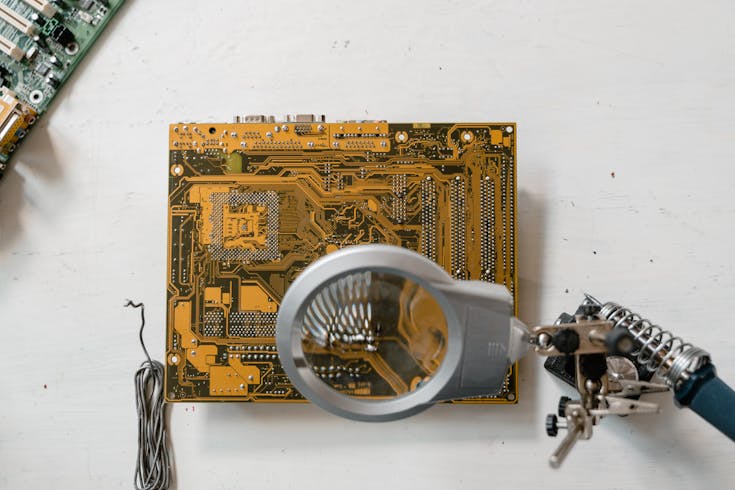
Indonesia’s current OSAT value stands around USD 1.1 billion. However, broader semiconductor assembly and packaging projections estimate expansion from USD 48.2 billion in 2025 to USD 77.6 billion by 2031, reflecting an 8.2 percent CAGR.
This trajectory is fueled by:
- Adoption of advanced packaging such as 2.5D/3D integration and fan-out wafer-level packaging
- Rising domestic demand from 30 to 60 million smartphones annually
- Electric vehicle chip requirements including SiC and GaN modules
- 5G infrastructure expansion and IoT deployment
The growth narrative is not speculative. It is policy-aligned. Indonesia aims to reduce its USD 4.87 billion semiconductor import bill by strengthening ATP capabilities in Batam and Bekasi.
Also read: Major Industries in Indonesia (Based on Contribution to GDP)
Geographic and Industrial Concentration
Batam serves as the primary OSAT hub, benefiting from free trade zone incentives and proximity to Singapore and Malaysia. Companies such as PT. Infineon Technologies Batam and PT. UTAC Manufacturing Services Indonesia anchor the ecosystem.
Other notable players include:
- PT. Sat Nusapersada Tbk
- PT. SUMCO Indonesia in Bekasi
- PT. TDK Electronics Indonesia
International electronics manufacturers such as Samsung and Panasonic also operate assembly-related facilities, reinforcing Indonesia’s integration into global supply chains.
Also read: Batam Semiconductor Hub: Key Areas and Opportunities
Regulatory Framework and Incentives
Indonesia’s regulatory landscape is increasingly pro-investment.
PP No. 28/2025 simplifies semiconductor factory licensing via OSS. BKPM Regulation No. 5/2025 reduces minimum capital requirements for PT PMA from IDR 10 billion to IDR 2.5 billion per KBLI, lowering entry barriers.
Fiscal incentives include:
- Tax holidays
- Super deduction up to 300 percent for R&D
- Import duty exemptions
- Corporate income tax reductions for strategic projects
These measures align with the 2025–2029 Semiconductor Ecosystem Roadmap focusing on four pillars: materials, chip design, fabrication, and OSAT.
Opportunities for Foreign Investors
Indonesia deliberately prioritizes back-end manufacturing. This is strategic. Front-end fabrication requires capital intensity beyond immediate readiness. OSAT leverages Indonesia’s competitive labor base and industrial zones.
Opportunities exist in:
- Advanced packaging solutions such as chiplets and hybrid bonding
- EV power semiconductor testing
- AI and high-performance computing validation
- Localization partnerships with Malaysian and ASEAN players
- Technology transfer and workforce development
If you want a deeper macro view, we recommend reviewing Semiconductor Industry in Indonesia: Outlook and Opportunities to understand the broader ecosystem transformation.
Key Challenges
Despite strong fundamentals, structural gaps remain.
Talent Shortage
There is a shortage of packaging and test engineers. University-industry alignment is still evolving.
Infrastructure Constraints
Cleanroom facilities, stable power supply, and material sourcing remain limited.
Import Dependency
Over 90 percent reliance on imported semiconductors exposes supply chain risk.
R&D Gap
Domestic innovation capacity is still behind regional competitors such as Malaysia and Vietnam.
These challenges do not eliminate opportunity. They define the strategic entry points for technology-driven investors.
Strategic Outlook Toward 2030
Indonesia’s OSAT expansion is part of a national resilience strategy. The government allocated USD 120–250 million for infrastructure and workforce enhancement. The objective is to move from assembler to integrated participant in the global value chain.
For foreign semiconductor businesses, timing matters. Regulatory reforms are accelerating, and capital thresholds are lower than before.
Also read; Guide to Investing in Semiconductors in Indonesia
At InvestinAsia, we work directly with international investors establishing fully compliant PT PMA entities under Law No. 25/2007. Through coordination with BKPM and the OSS system, we manage incorporation, tax registration, and operational licensing, typically within 10 working days. We explain this clearly in How InvestinAsia Simplifies the PMA Incorporation Journey, where we detail licensing, tax registration, and coordination with government authorities.
For expatriates and semiconductor companies planning assembly or OSAT operations in Batam or other industrial zones, we ensure documentation is processed through the Ministry of Law and Human Rights efficiently and transparently.
If Indonesia’s OSAT market aligns with your strategic roadmap, our PT PMA Registration Service are ready to help you establish your legal entity and move from feasibility study to operational execution.
FAQs About Indonesia OSAT Market
What is the current size of Indonesia’s OSAT market?
The market is valued at approximately USD 1.1 billion, with strong projected growth toward 2030.
Why does Indonesia focus on OSAT rather than fabrication?
OSAT requires lower capital intensity and leverages Indonesia’s labor competitiveness while building ecosystem capacity gradually.
Which regions dominate OSAT activities in Indonesia?
Batam is the primary hub, followed by Bekasi, due to industrial zones and free trade facilities.
What industries drive OSAT demand?
Consumer electronics, EV and automotive semiconductors, 5G telecom infrastructure, and IoT devices.
What is the growth projection through 2031?
Broader assembly and packaging estimates project growth to USD 77.6 billion by 2031 with an 8.2 percent CAGR.