Most people outside Indonesia assume that government agencies or large waste companies handle the recycling. At meaningful scale, they do not. Waste pickers, small scrap traders, and community waste banks recover the bulk of what gets diverted from landfill. No formal infrastructure has been built to replace them. The waste management policy, EPR compliance obligations, and circular economy investment opportunities in Indonesia all sit on top of this informal foundation.
Also read: Overview of Recycling Industry in Indonesia
Who Makes Up the Informal Waste Sector
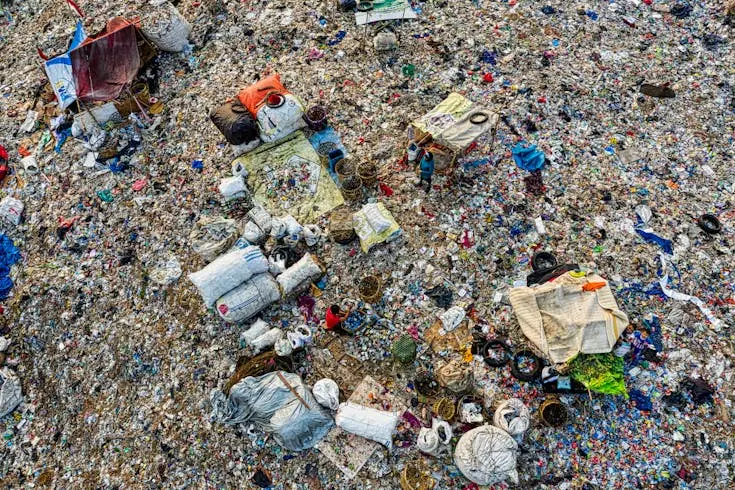
The informal waste sector is not a single organized network. It is a layered system of individual workers, small traders, and community groups that operate outside formal employment but do material recovery work the formal system has not scaled to cover. Three groups form the core.
Pemulung (Waste Pickers)
Pemulung collect recyclable materials from roadsides, waste transfer points, and open dump sites. They sort plastics, metals, cardboard, and glass by grade, then sell sorted materials to nearby scrap buyers. Estimates of their total number range from 500,000 to over two million, depending on whether seasonal and part-time collectors are counted.
Their daily income is directly tied to commodity prices. When the price for low-grade plastic falls, their earnings fall with it. Most pemulung work without a formal contract, social security enrollment, or health coverage.
Also read: Indonesia’s Plastic Industry: A Complete Overview for Foreign Investors
Lapak and Pengepul (Scrap Depots and Aggregators)
Lapak are small scrap depots that buy sorted materials from pemulung and other collectors. Pengepul are larger aggregators who consolidate volume from multiple lapak before selling to industrial recyclers or exporters. This two-tier structure is the market infrastructure that connects individual waste pickers to industrial buyers.
Pricing is negotiated, not fixed. Aggregators closer to industrial buyers hold more price power. Pemulung, at the bottom of the chain, absorb the most risk with the least ability to push back.
Bank Sampah (Waste Banks)
Waste banks are community organizations where households deposit pre-sorted recyclable waste in exchange for small cash payments or savings credits. The waste bank then aggregates materials and sells them to recyclers or larger aggregators. Some operate with local government support; many are entirely community-run.
The Ministry of Environment and Forestry (KLHK) recorded more than 10,000 registered waste banks across Indonesia by the early 2020s. The key difference from pemulung activity is where sorting happens: at the household, before waste leaves the home. This improves material quality and reduces contamination that would otherwise cut the resale price.
Also read: Waste Management Industry in Indonesia: Investment Guide for Foreign Businesses
How Much of Indonesia’s Recycling Does This Sector Actually Handle
Indonesia generates roughly 67 to 70 million tons of solid waste per year, according to KLHK’s National Waste Management Information System (SIPSN). Of that volume, the formal waste management infrastructure handles collection. Sorting and recovery are a different story.
Sector research and government analyses put informal actors at 70 to 90 percent of recyclable materials diverted from landfill. That is not a fringe supplement to the formal system. That is the system.
The same dynamic plays out across the Philippines, Vietnam, and Thailand. What makes Indonesia distinct is the size: 270 million people, accelerating urbanization, and a waste generation rate that has outpaced formal collection infrastructure for decades.
| Sector Actor | Function | Estimated Scale |
|---|---|---|
| Pemulung | Street and dump site collection and sorting | 500,000 to 2 million individuals |
| Lapak / Pengepul | Volume aggregation and market linkage | Tens of thousands of depots nationwide |
| Bank Sampah | Household-level sorting and community collection | 10,000+ registered units (KLHK data) |
The Legal Framework Governing Waste Management in Indonesia
Waste management in Indonesia sits under two main instruments. Law No. 18 of 2008 on Waste Management (UU 18/2008) sets out responsibilities across the value chain, from households to regional governments to producers. Government Regulation No. 81 of 2012 (PP 81/2012) operationalizes this at the collection and processing level.
Neither law creates a formal legal category for waste pickers. Pemulung are not recognized as workers under these regulations, which puts them outside the reach of labor protections. They are also not prohibited. In practice, enforcement is inconsistent: tolerated in some cities, displaced in others when waste facilities are relocated or modernized.
KLHK Regulation No. 75 of 2019 (PerLHK 75/2019) introduced Indonesia’s Extended Producer Responsibility (EPR) framework. Producers of plastic packaging must now submit roadmaps for reducing and recovering post-consumer packaging waste. Many companies satisfy their EPR commitments by contracting with registered waste banks, which draws the informal sector into formal corporate sustainability programs.
Foreign companies in Indonesia that manufacture or import packaging-heavy products are subject to these EPR obligations from the time operations begin. Sorting out the correct business licensing in Indonesia from the start includes accounting for environmental compliance requirements tied to products sold in the market.
Setting Up a Waste or Environmental Business in Indonesia?
Our team handles PT PMA registration and sector-specific licensing for foreign investors in environmental services.
What Makes This Sector Difficult to Sustain
The informal waste sector does enormous work on very little structural support. Three problems erode both worker welfare and the sector’s long-term stability.
Income Tied Directly to Global Commodity Prices
When China’s National Sword policy took effect in 2018, restricting imports of mixed recyclable materials, plastic prices fell sharply across Southeast Asia. Indonesian lapak responded by paying less to pemulung. There was no buffer and no transition mechanism. Waste pickers absorbed the drop overnight.
Daily earnings for most pemulung run between IDR 50,000 and IDR 150,000, with meaningful variation by city, material mix, and site access. At the lower end, this places households near or below the regional poverty line. The income is real; the stability is not.
No Access to Social Protection
Because informal waste workers are not classified as employees under Indonesian labor law, they fall outside automatic enrollment in BPJS Ketenagakerjaan, the national workers’ social security program. Minimum wage rules do not apply to them. Neither do occupational health or paid leave protections. Some regional governments have piloted subsidized BPJS enrollment for waste bank members, but these programs are not nationally standardized and coverage remains patchy.
Displacement When Formal Systems Expand
This is the tension the sector has never resolved. When formal waste infrastructure improves, closed landfills, mechanized sorting facilities, waste-to-energy plants, it typically removes the access points pemulung depended on. Workers who previously recovered value from a waste stream find themselves excluded from it. No transition support follows.
Jakarta’s waste management modernization has produced this outcome more than once. The city builds tidier waste handling. Pemulung lose access. The policy discussions do not produce workable answers for what those workers do afterward.
How EPR Is Reshaping Informal Sector Relationships
PerLHK 75/2019 has shifted how large consumer goods companies interact with the informal recycling network. Several major brands have signed offtake agreements with registered waste banks, paying above-market rates for specific plastic grades to meet their EPR roadmap targets.
This has helped waste banks with corporate partnerships. It has also created a two-tier system. Banks connected to brand programs earn more and have more predictable revenue. Those without such partnerships continue selling at spot market rates with full commodity price exposure. The EPR framework is still developing. Verification requirements and enforcement mechanisms are being built incrementally.
For foreign companies in Indonesia, the practical implication is straightforward. EPR compliance is not a paperwork exercise. It requires active engagement with the recycling supply chain. In Indonesia, that chain runs primarily through informal actors.
Why Foreign Investors Are Looking at Indonesia’s Waste Sector
Indonesia’s waste management sector has real gaps. The country produces tens of millions of tons of waste annually, with limited industrial-scale sorting, insufficient processing capacity across most recyclable streams, and a government push toward circular economy targets in the national medium-term development plan (RPJMN). The demand side of the market is present. The infrastructure to serve it is not.
Foreign-owned companies in this sector typically set up a PT PMA company in Indonesia. Most environmental services and recycling categories are open to 100 percent foreign ownership under Indonesia’s current investment rules. Applications go through the Online Single Submission (OSS) system at BKPM.
Three investment categories have attracted the most foreign activity in recent years.
Recycling Technology and Industrial Processing
Indonesia has the material supply. It does not have the processing capacity. Companies with expertise in plastic sorting, chemical recycling, paper processing, or e-waste dismantling have entered through PT PMA structures to build facilities. The gap is significant enough that even relatively modest processing operations operate with limited local competition.
Waste-to-Energy Development
Presidential Regulation No. 35 of 2018 opened the path for waste-to-energy electricity generation across Indonesia. Jakarta, Surabaya, and Makassar have active project pipelines open to foreign investment under public-private partnership frameworks. Project timelines in this category are long. Policy support has been consistent.
Digital Platforms for Waste Collection
Investors from Singapore and Japan have built digital platforms that connect households, waste banks, and recyclers. Some register pemulung as collection agents, giving them digital payment records and more predictable income. These platforms address two problems at once: the data gap in waste tracking and the income instability that makes informal waste work so precarious.
Ready to Enter Indonesia’s Environmental Sector?
InvestinAsia’s 380+ in-house professionals manage registration, licensing, and compliance from day one.
Frequently Asked Questions
Who are pemulung and how do they earn income?
Pemulung are informal waste pickers who collect recyclable materials from streets, waste transfer points, and dump sites. They sort materials by type and grade, then sell to local scrap buyers called lapak. What they earn on a given day depends on how much they collect and what the lapak pays for each material, which moves with commodity markets.
What is a bank sampah and how does it work?
A bank sampah is a community organization where households deposit pre-sorted recyclable waste in exchange for small cash payments or savings. The waste bank aggregates the materials and sells them to recyclers or aggregators. KLHK recorded more than 10,000 registered waste banks in Indonesia. Some operate with local government support; others are entirely community-managed.
How much of Indonesia’s recycling is handled by the informal sector?
Sector research and government analyses put informal actors at 70 to 90 percent of recyclable materials diverted from landfill in Indonesia. The formal system handles collection. Sorting and recovery are carried out almost entirely by the informal network.
Can foreign companies invest in Indonesia’s waste management sector?
Yes. Most waste management and recycling activities are open to foreign investment through PT PMA registration. The applicable KBLI business classification code determines specific ownership rules for each activity. A licensed corporate services firm can confirm eligibility and manage the OSS application process.
What is Indonesia’s Extended Producer Responsibility regulation?
Indonesia’s EPR framework comes from KLHK Regulation No. 75 of 2019. It requires producers and importers of certain products, particularly plastic packaging, to submit roadmaps for reducing and recovering post-consumer waste. Many companies meet EPR targets by partnering with registered waste banks or certified recycling facilities.
What environmental permits does a foreign-owned waste business need in Indonesia?
Requirements vary by activity and scale. Most operations need a business identification number (NIB) from OSS, an environmental document (AMDAL for large-scale projects, UKL-UPL for smaller ones), and operational approval from KLHK or the relevant regional environment agency. Companies handling hazardous waste face additional requirements under Government Regulation No. 22 of 2021.
References
1. Kementerian Lingkungan Hidup dan Kehutanan. (2023). Sistem Informasi Pengelolaan Sampah Nasional (SIPSN).
https://sipsn.menlhk.go.id/
2. Undang-Undang Nomor 18 Tahun 2008 tentang Pengelolaan Sampah. Sekretariat Negara Republik Indonesia.
https://jdih.setkab.go.id/PUUdoc/7522/UU_No_18_Tahun_2008.pdf
3. Peraturan Pemerintah Nomor 81 Tahun 2012 tentang Pengelolaan Sampah Rumah Tangga dan Sampah Sejenis Sampah Rumah Tangga. Sekretariat Negara Republik Indonesia.
https://jdih.setkab.go.id/PUUdoc/17040/PP_Nomor_81_Tahun_2012.pdf
4. Peraturan Menteri Lingkungan Hidup dan Kehutanan Nomor P.75/MENLHK/SETJEN/KUM.1/10/2019 tentang Peta Jalan Pengurangan Sampah oleh Produsen.
https://jdih.menlhk.go.id/uploads/files/P_75_2019_PETA_JALAN_PENGURANGAN_SAMPAH_PRODUSEN_mn.pdf
5. World Bank. (2021). Improving Solid Waste Management in Indonesia.
https://www.worldbank.org/en/country/indonesia/brief/improving-solid-waste-management-in-indonesia
6. Peraturan Presiden Nomor 35 Tahun 2018 tentang Percepatan Pembangunan Instalasi Pengolah Sampah Menjadi Energi Listrik Berbasis Teknologi Ramah Lingkungan. Sekretariat Negara Republik Indonesia.
https://jdih.setkab.go.id/PUUdoc/175488/Perpres_35_Tahun_2018.pdf