Indonesia’s waste management industry was valued at USD 15.11 billion in 2023 and is projected to reach USD 31.15 billion by 2030, growing at a compound annual growth rate of 9.80%. Foreign companies can enter this market through a PT PMA (foreign-owned limited liability company), with multiple subsectors open to full or majority foreign ownership under Indonesia’s Positive Investment List.
The sector is growing for a simple reason: Indonesia produces enormous volumes of waste and processes less than two-thirds of it. The government has committed hard targets for 2029 and needs private capital and technical capacity to get there. That gap is where foreign operators are finding traction.
Why Indonesia’s Waste Problem Is a Structural Investment Opportunity
Indonesia generated approximately 34.2 million tons of waste across 317 districts and cities in 2024, according to U.S. Commercial Service Indonesia data. Food waste accounts for 39.26% of that total, with the rest comprising plastics, paper, and other organic material.
Daily waste generation has reached approximately 175,000 tons, driven by rapid urbanization in Jakarta, Surabaya, and Medan. Only around 60% of this waste is properly managed. The remaining 40% ends up in waterways, open dumpsites, or informal disposal chains with no environmental oversight.
This is not a short-term dip. Urban population growth is adding millions of new city residents each year. The government has set a target of 100% waste management by 2029 and a zero-waste national vision by 2050 to 2060. Meeting those targets at current public sector capacity is not realistic without sustained private investment. Indonesia is essentially a supply-rich, infrastructure-poor market, which is a useful thing to be when you are the infrastructure provider.
For broader context on the sectors defining Indonesia’s economy right now, see InvestinAsia’s overview of major industries in Indonesia.
Key Subsectors Open to Foreign Investment
Municipal Solid Waste Collection and Processing
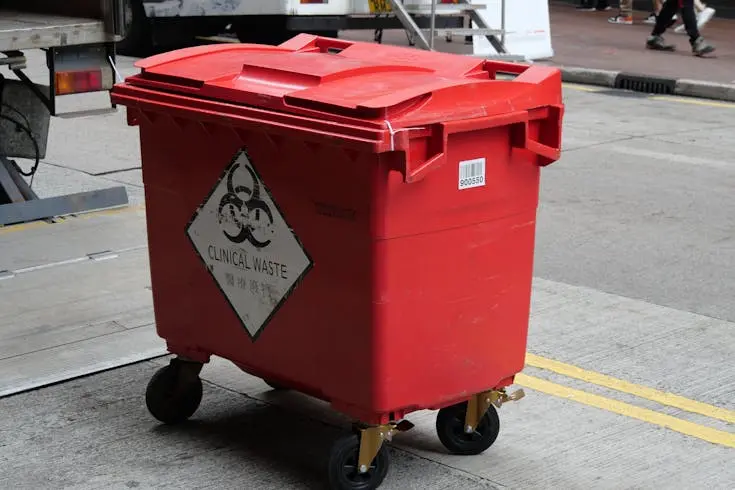
The collection segment holds the largest market share within Indonesia’s waste management industry. Government-driven expansion of collection networks has made this the most accessible entry point for private operators, particularly in secondary cities that lack the fiscal capacity to run their own systems.
Jakarta and Surabaya lead in waste infrastructure, but the volume opportunity outside these cities is substantial. Local governments are increasingly turning to public-private partnership models to fill service gaps, which gives international operators a route in without competing directly against established domestic players for primary contracts.
Waste-to-Energy Infrastructure
Waste-to-energy is the highest-profile subsector under the current government program. Presidential Regulation No. 109 of 2025 centralized Indonesia’s WtE development under BPI Danantara, the country’s sovereign wealth fund, replacing the fragmented municipality-by-municipality approach that had previously constrained private investment.
Each facility requires an estimated investment of IDR 2.5 to 3.2 trillion (roughly USD 159 to 203 million), with installed capacity of 16 to 20 megawatts and daily processing of approximately 1,000 tons of waste. The new regulation expanded eligible project locations from 12 cities to nationwide, provided municipalities meet minimum waste generation and financial requirements. By early 2026, 24 international companies had entered the first stage of Indonesia’s WtE tender program, covering priority cities including Bali, Bogor, Bekasi, and Yogyakarta.
Recycling and Circular Economy
Indonesia’s recycling rate sits below 25% of total waste, with plastic recycling estimated at around 10% nationally. Indonesia banned plastic scrap imports on January 1, 2025, which tightened domestic feedstock availability and pushed demand for local recycling capacity higher almost immediately.
The government’s Extended Producer Responsibility (EPR) framework became mandatory in 2025 under Ministry of Environment Regulation No. P.75/2019. Plastic producers and importers are now legally required to organize collection, sorting, recycling, and disposal of their packaging. By 2029, single-use plastics including polystyrene food containers, plastic cutlery, and certain shopping bags are scheduled for full phase-out. That compliance obligation is already generating corporate demand for recycling service providers.
InvestinAsia has published a dedicated analysis of the recycling industry in Indonesia, covering specific KBLI classifications, investor entry strategies, and market data for this subsector.
E-Waste Management
Indonesia’s electronics import value reached USD 10 billion in 2024. Annual e-waste volumes exceeded 1.3 million tons, and projections put that figure at 3.2 million tons by 2040, with a potential economic value of up to USD 14 billion. Specialized e-waste processing facilities are still scarce relative to that volume, and the segment has seen limited formal private sector participation so far.
Hazardous and Industrial Waste
Indonesia’s downstream industry program is accelerating investment in nickel processing, petrochemicals, and heavy manufacturing. Hazardous and industrial waste volumes from these operations will grow in parallel. Under GR 28/2025, companies across all sectors must now demonstrate wastewater management, air emissions, and hazardous waste handling compliance before receiving business approvals. That requirement is generating demand for licensed third-party waste treatment operators.
Exploring a Waste Management Business in Indonesia?
Our team of 380+ professionals can help you identify the right KBLI, structure your PT PMA, and secure sector permits.
Regulatory Framework for Waste Management in Indonesia
Several overlapping regulations govern this sector, spanning national statutes, presidential decrees, and ministerial orders. Non-compliance can trigger operational shutdown or financial penalties, and the licensing sequence is stricter here than in most commercial sectors.
Law No. 18 of 2008 on Solid Waste Management
This is the foundational statute. It defines the roles of central government, regional governments, and the private sector in waste handling, and establishes the liability framework for environmental damage from waste operations. All sector licensing traces back to this law.
Presidential Regulation No. 109 of 2025
This regulation replaced Presidential Regulation No. 35 of 2018, which had limited WtE projects to 12 cities. Under the new framework, any municipality generating at least 1,000 tons of waste daily can qualify, provided it meets land, budget, and local sanitation fee criteria. The regulation also streamlined environmental licensing and standardized project agreements, addressing the bankability problems that had stalled previous WtE investments.
Ministry of Environment Regulation No. P.75/2019 (EPR Framework)
From 2025, this regulation moved from voluntary to mandatory enforcement. Plastic producers and importers now fund and organize collection, sorting, and recycling of their packaging across the value chain. For waste management operators, this is an important demand driver: corporate clients with EPR obligations need verified service partners who can handle their waste streams compliantly.
Government Regulation No. 5 of 2021 and GR 28 of 2025
These regulations govern the risk-based business licensing system through the Online Single Submission (OSS) platform. GR 28/2025 added mandatory environmental compliance checkpoints before business approvals are issued. For waste management businesses, environmental assessments and hazardous material handling plans must be prepared and submitted before the licensing sequence begins. Operating within an established industrial estate can reduce this burden, as zone-level environmental approvals may substitute for site-specific assessments.
Read our article for more information about Waste Management Regulations in Indonesia
InvestinAsia’s coverage of green technology investment incentives in Indonesia also provides additional context on how environmental sector licensing works in practice.
How Foreign Companies Enter the Waste Management Sector
Foreign investors must operate through a PT PMA. Most waste management subsectors are listed on the Positive Investment List and are open to full or majority foreign ownership, though specific caps depend on the KBLI code registered.
Selecting the Correct KBLI Code
The five-digit KBLI code determines your permitted business scope, ownership limits, licensing pathway, and capital requirements. Waste collection, processing, recycling, and hazardous waste treatment each have distinct codes. Choosing the wrong one can trigger additional permit requirements, ownership restrictions, or minimum capital obligations that were not anticipated during planning.
Waste management activities fall primarily under KBLI Division 38. Key codes include 38110 for non-hazardous waste collection, 38120 for hazardous waste collection, 38210 for non-hazardous waste treatment and disposal, 38220 for hazardous waste treatment and disposal, and 38300 for materials recovery and recycling. Each code carries its own risk classification and licensing requirements in the OSS system.
Minimum Capital Requirements
Under BKPM Regulation No. 5 of 2025, the minimum paid-up capital for a PT PMA is IDR 2.5 billion per company. The investment plan must show more than IDR 10 billion per five-digit KBLI per project location, excluding land and buildings. WtE infrastructure projects require substantially higher capital given the physical scale involved, with individual facilities estimated at IDR 2.5 to 3.2 trillion.
The Licensing Sequence
Under GR 28/2025, spatial conformity approval (KKPR), environmental approval (AMDAL or UKL-UPL), and building permits must be obtained before applying for a business license (NIB) through the OSS system. For large waste facilities, the environmental approval is typically the most time-consuming step and requires a full Environmental Impact Assessment. Plan for 12 to 24 months of pre-operational regulatory work for major projects.
InvestinAsia’s PT PMA registration service covers the full sequence from company name approval through to sector licensing and OSS registration.
Operational Business Licenses
Beyond the NIB, waste management operators need a Waste Management Business License (Izin Usaha Pengelolaan Sampah) from local government authorities, an environmental permit, and in the case of hazardous waste, a separate B3 (Bahan Berbahaya dan Beracun) handling permit from the Ministry of Environment and Forestry. InvestinAsia’s Indonesia business license service manages preparation and submission of these applications.
Investment Incentives and Public Funding
World Bank Local Service Delivery Improvement Project
In December 2025, the World Bank approved USD 350 million for Indonesia’s Local Service Delivery Improvement Project. The project introduces performance-based grants for local governments, tied to measurable improvements in waste collection, segregation, and diversion. Private operators partnering with qualifying local governments can benefit indirectly through government service contracts and infrastructure co-investment frameworks.
AIIB Solid Waste Infrastructure Project
The Asian Infrastructure Investment Bank approved USD 150 million in October 2025 for solid waste infrastructure across selected Indonesian cities. The project focuses on collection equipment, sorting facilities, and disposal site upgrades. International operators with proven technical track records are positioned to participate as service providers under the procurement frameworks these projects generate.
Government National Budget Allocation
The Indonesian government allocated more than USD 300 million in the 2024 national budget for waste management programs. Funds were directed toward expanding collection and sorting infrastructure in urban areas and toward public-private partnerships for waste-to-energy plants. This level of budget commitment signals that waste management is a durable spending priority rather than a one-cycle allocation.
Tax Incentives for Priority Sectors
Waste management and environmental technology businesses classified in priority sectors can apply for tax holidays or investment allowances through the OSS system. Projects meeting the investment threshold and national strategic criteria may qualify for corporate income tax relief for up to 20 years. Eligibility depends on your specific KBLI and investment structure and should be confirmed before incorporation.
Also read: InvestinAsia’s coverage of how EPR-driven plastic waste compliance is creating downstream demand for recycling and waste processing services from corporate clients across Indonesia.
Challenges Foreign Investors Should Weigh
Urban Land Constraints
Dense metropolitan areas have very little land available for waste treatment facilities. Residential, industrial, and commercial development competes for the same limited footprint, and community opposition to nearby waste sites is common. Investors should plan for extended pre-operational timelines and factor environmental clearance periods into their financial models. Operating within designated industrial estates can partially address this by leveraging shared environmental approvals and pre-cleared land.
The Informal Sector
Waste pickers and informal collectors handle a significant share of material recovery across Indonesia. They often function as de facto collection infrastructure in areas where formal services do not reach. Formal operators entering this space need to design business models that account for this reality, whether by working with informal networks or providing clear economic alternatives. Ignoring the informal sector tends to create supply chain disruptions and community friction that are difficult and expensive to resolve after operations have started.
Multi-Level Regulatory Coordination
Business licenses come from the national OSS system, but operational permits and local sanitation regulations are administered by city or district governments. A company can hold a valid national NIB and still face operational delays because a local-level permit is pending. Managing this requires local expertise and established working relationships with regional government offices, not just national-level compliance.
LKPM Reporting Obligations
All PT PMA companies must submit quarterly Investment Activity Reports (LKPM) to BKPM. Under GR 28/2025, filing deadlines are the 15th of April, July, October, and January. Late or inaccurate filings can affect license validity. InvestinAsia’s compliance support service covers LKPM reporting service as part of its post-establishment package.
Frequently Asked Questions
Can foreign companies own a waste management business in Indonesia?
Yes. Most waste management subsectors are open to foreign investment under the Positive Investment List established by Presidential Regulation No. 49 of 2021. Foreign companies operate through a PT PMA structure. Ownership limits vary by KBLI code, but collection, processing, and recycling activities generally permit full or majority foreign ownership. Verify the exact cap for your intended KBLI before finalizing your structure.
What is the size of Indonesia’s waste management market?
The Indonesia waste management market was valued at USD 15.11 billion in 2023 and is projected to reach USD 31.15 billion by 2030, growing at a CAGR of 9.80%. Indonesia generates approximately 34.2 million tons of waste annually, with only around 60% currently managed properly, leaving a large addressable gap for private operators.
What is Presidential Regulation No. 109 of 2025?
Presidential Regulation No. 109 of 2025 restructured Indonesia’s waste-to-energy program by centralizing coordination through BPI Danantara, the country’s sovereign wealth fund. It expanded eligible project locations from 12 cities under the previous regulation to a nationwide scope, provided municipalities meet minimum daily waste generation and financial requirements. The regulation also streamlined environmental licensing and standardized investment agreements to improve bankability for private developers.
What KBLI codes apply to waste management businesses in Indonesia?
Waste management activities fall primarily under KBLI Division 38. Key codes include 38110 for non-hazardous waste collection, 38120 for hazardous waste collection, 38210 for non-hazardous waste treatment and disposal, 38220 for hazardous waste treatment and disposal, and 38300 for materials recovery and recycling. Each code carries a specific risk classification, ownership eligibility, and licensing path under the OSS system.
What minimum investment is required for a PT PMA in waste management?
Under BKPM Regulation No. 5 of 2025, the minimum paid-up capital is IDR 2.5 billion per PT PMA company. The investment plan must show more than IDR 10 billion per five-digit KBLI per project location, excluding land and buildings. Waste-to-energy projects have significantly higher capital requirements, with individual facilities estimated at IDR 2.5 to 3.2 trillion.
Do waste management companies in Indonesia need special environmental permits?
Yes. Beyond the standard NIB through OSS, waste management operators need an environmental approval (AMDAL for large facilities, UKL-UPL for smaller ones). Hazardous waste handlers also require a separate B3 handling permit from the Ministry of Environment and Forestry. Under GR 28/2025, these environmental approvals must be obtained before a business license is issued.
Ready to Enter Indonesia’s Waste Management Sector?
InvestinAsia handles PT PMA setup, sector licensing, and ongoing compliance so you can focus on operations.
References
1. World Bank. (2025, December 18). The World Bank Approves a New Project to Support Indonesia Achieve Solid Waste Management Targets.
https://www.worldbank.org/en/news/press-release/2025/12/18/the-world-bank-approves-a-new-project-to-support-indonesia-achieve-solid-waste-management-targets
2. U.S. Commercial Service Indonesia. (2025). Indonesia: Environmental Technology.
https://www.trade.gov/country-commercial-guides/indonesia-environmental-technology
3. Asian Infrastructure Investment Bank. (2025). Indonesia: Solid Waste Management for Sustainable Urban Development Project.
https://www.aiib.org/en/projects/details/2025/approved/Indonesia-Solid-Waste-Management-for-Sustainable-Urban-Development-Project.html
4. SUPRA International. (2026). Indonesia’s Waste-to-Energy Update: Danantara’s Tender Process, Regulatory Framework, and Business Opportunities.
https://supra-international.com/insights/indonesia-s-waste-to-energy-update-danantara-s-tender-process-regulatory-framework-and-business-opportunities-for-municipal-waste-infrastructure-development
5. Kementerian Lingkungan Hidup dan Kehutanan. Sistem Informasi Pengelolaan Sampah Nasional (SIPSN).
https://sipsn.menlhk.go.id
6. Pemerintah Republik Indonesia. (2021). Government Regulation No. 5 of 2021 on Risk-Based Business Licensing. Online Single Submission (OSS).
https://oss.go.id
7. Petromindo. (2026, March 16). Danantara, Veolia explore WTE investment opportunities in Indonesia.
https://www.petromindo.com/news/article/danantara-veolia-explore-wte-investment-opportunities-in-indonesia