Indonesia’s waste management laws apply to every business operating in the country, including foreign-owned companies registered as PT PMA. The legal backbone is Law No. 18 of 2008 on Waste Management and Law No. 32 of 2009 on Environmental Protection and Management, with important updates added in 2024 and 2025. Two changes in 2025 raised the bar considerably: Extended Producer Responsibility (EPR) became mandatory for packaging producers, and Presidential Regulation No. 109 of 2025 overhauled the national Waste-to-Energy framework. Criminal penalties reach up to 15 years imprisonment and fines of up to Rp 5 billion, with no statute of limitations for hazardous waste violations.
If you run or plan to run a business in Indonesia, this is not a regulatory area you can audit later. Read on for the full framework as it stands in 2026, what changed in the past two years, and what your business actually needs to do.
Also Read: Waste Management Industry in Indonesia: Investment Guide for Foreign Businesses
The Core Legal Framework: Key Waste Laws in Indonesia
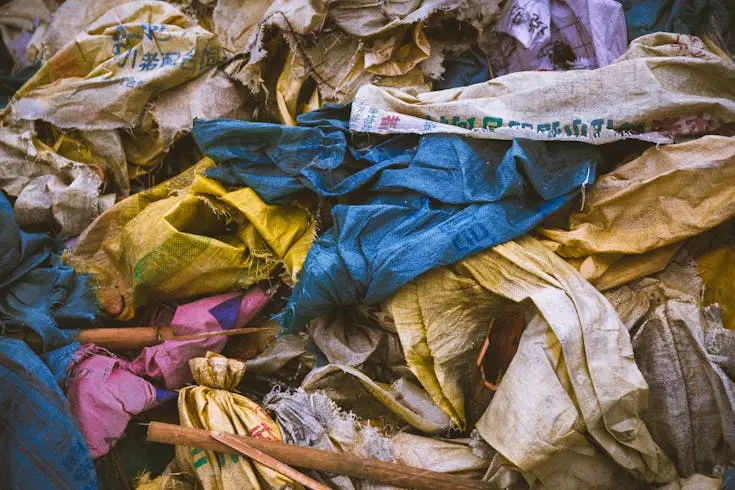
Indonesia’s waste regulation runs through a layered system of national laws, government regulations, and ministerial decrees. Sector-specific rules regularly impose requirements that go well beyond the parent law, which is why most foreign businesses end up needing to track all three levels.
Law No. 18 of 2008 on Waste Management
Law No. 18/2008 defines waste as solid remnants of daily human activities or natural processes and groups it into three categories: household waste, waste similar to household waste (from commercial or industrial premises), and specific waste that requires special handling.
Article 15 makes producers responsible for packaging and products that are difficult to decompose or recycle. That clause is the legal basis for Extended Producer Responsibility in Indonesia. Article 40 sets out criminal penalties for violations that cause environmental harm or endanger public health.
Article 69 prohibits importing waste into Indonesian territory. Since January 1, 2025, that prohibition now covers plastic scrap imports, closing a channel some manufacturers used to source recycled feedstock from overseas.
Law No. 32 of 2009 on Environmental Protection and Management
This law governs hazardous and toxic waste, known locally as Bahan Berbahaya dan Beracun (B3) waste. It covers the full lifecycle: generation, storage, transportation, treatment, and disposal.
Article 88 applies strict liability to any business that uses, produces, or manages B3 waste. If your operations caused environmental pollution, you are liable regardless of fault. That liability transfers when you sell or restructure your business. It does not expire.
Government Regulation No. 22 of 2021 (GR 22/2021) is the current implementing regulation under this law, replacing Government Regulation No. 101 of 2014. GR 22/2021 sets the framework for B3 waste governance, covering management principles and institutional responsibilities across all sectors.
Government Regulation No. 81 of 2012 on Household Waste
GR 81/2012 provides the technical framework for managing municipal solid waste, establishing reduce-reuse-recycle (3R) as the standard for household and household-equivalent waste. Commercial operations, including offices, hotels, and retail facilities, fall under its scope because they generate waste classified as household-equivalent.
This regulation also forms the legal basis for local government authority over waste collection, sorting, transportation, and final processing. Requirements can vary significantly between Jakarta, Bali, and other provinces, each of which applies its own waste management policies on top of the national rules.
Government Regulation No. 27 of 2020 on Specific Waste Management
PP 27/2020 covers waste that needs special handling because of its properties, concentration, or volume. It identifies six categories, including waste containing B3 materials, disaster waste, and construction debris. Under this regulation, producers are required to limit B3 content in their products and to set up take-back systems for end-of-life collection.
MOEF Regulation No. 9 of 2024, issued July 1, 2024, was issued under this regulation’s authority. It is one of the most practically significant updates for businesses in recent years, because it formally separates two types of B3 waste that were previously treated under a single classification.
Also read: ESG Regulations in Indonesia: Latest Policies and Compliance Guide for Foreign Investors
What Changed in 2024 and 2025
Three regulatory changes between mid-2024 and late 2025 directly affect how businesses manage waste in Indonesia. None of these obligations existed for most of 2023.
MOEF Regulation No. 9 of 2024: A New B3 Classification System
Effective July 1, 2024, this regulation drew a formal line between two categories of B3-containing waste. Sampah B3 covers solid waste from everyday human or commercial activities containing hazardous materials: used batteries, discarded electronics, empty B3 product containers, and expired consumer goods. Limbah B3 covers hazardous waste generated by industrial, agricultural, or production processes, whether liquid, gas, or solid.
Each category now has separate management requirements, facility standards, and reporting obligations. Commercial facilities must provide color-coded containers: red for household B3 products, orange for used packaging of B3 products, black for damaged or unused electronics, and brown for expired or spilled B3 substances. All containers must be watertight, covered, and sized to actual waste volume.
Facility managers of residential, commercial, industrial, and public zone buildings must provide dedicated temporary storage (TPSSS-B3). Existing facilities can qualify as TPSSS-B3 if they meet the storage standards set out in the regulation.
EPR Became Mandatory in 2025
Extended Producer Responsibility entered Indonesian law through MOEF Regulation No. P.75/2019, initially as a voluntary roadmap. In 2025, the government moved to mandatory enforcement. Environment Minister Hanif Faisol Nurofiq confirmed in mid-2025 that EPR obligations now cover businesses across the full supply chain, from upstream manufacturers through to importers and downstream distributors.
Any business that manufactures, imports, or sells products in plastic or non-biodegradable packaging in Indonesia, including PT PMAs, now has legal obligations under this framework. The specific requirements are covered in the EPR section below.
Presidential Regulation No. 109 of 2025: Waste-to-Energy Reset
Issued in late 2025, this regulation replaced Presidential Regulation No. 35 of 2018, which produced only two operational Waste-to-Energy facilities in seven years. By 2023, Indonesia’s annual waste accumulation had reached 56.63 million tons. Only 39% was properly managed. The rest went to open dumping. The new regulation creates a revised legal and investment framework for Waste-to-Energy (WtE) projects nationally, and is covered in detail below.
Open Dumping Ban Enforcement: April 2025
In April 2025, the central government ordered the closure of 343 landfills operating as open dumping sites. Open dumping has technically been illegal since Law No. 18/2008, but enforcement had been deferred repeatedly. Local officials who do not comply now face criminal liability. For businesses, this means the informal disposal arrangements that some operations relied on are no longer safe to use.
Extended Producer Responsibility (EPR): What Producers Must Do
Any business that manufactures, imports, or sells packaged products in Indonesia is an obligated producer under MOEF Regulation No. P.75/2019 and the 2025 mandatory enforcement framework. The regulation targets three sectors: manufacturing, food and beverage services, and retail. Foreign-owned companies operating as PT PMA fall within scope.
The overall EPR target is a 30% reduction in packaging waste by 2029. By end-2029, specific single-use plastic items are scheduled for full phase-out: polystyrene food containers, plastic cutlery, plastic straws, and certain shopping bag types. The compliance roadmap runs 2020 to 2029 and involves four stages.
| EPR Compliance Stage | What Producers Must Do |
|---|---|
| Planning | Submit a strategic waste reduction plan to KLHK. The plan must include baseline packaging volumes, reduction targets, and implementation timelines. |
| Implementation | Achieve waste reduction targets through the activities in the approved plan: redesigning packaging, switching to recyclable materials, establishing take-back or collection systems. |
| Monitoring | Track the type and volume of products and packaging produced, sold, and reduced, at minimum bi-annually. Submit monitoring data to the Ministry of Environment and Forestry (KLHK). |
| Evaluation | Compare targets against actual results each period. Identify implementation gaps and update the roadmap accordingly. |
For PT PMAs in food and beverage or packaged consumer goods, EPR compliance means reporting packaging volumes introduced to the Indonesian market to KLHK, demonstrating collection or recycling efforts (independently or through partnerships with licensed waste handlers), and in some cases paying into national waste reduction programs.
For a closer look at how this affects specific packaging formats, read InvestinAsia’s guide on plastic packaging regulations in Indonesia.
Not Sure Which Waste Regulations Apply to Your Business?
Our team maps your sector to the right compliance obligations before you start operations.
B3 Hazardous Waste: Obligations for Businesses
B3 waste management is governed by Law No. 32/2009, GR 22/2021, and MOEF Regulation No. 6/2021 on the Procedures and Requirements for the Management of Hazardous Wastes. The last of these is not a short document: 14 chapters, 237 articles, 29 annexes. It replaced several earlier regulations in 2021 and sets the current standard across all sectors.
The obligation to manage B3 waste applies to any business that uses, produces, or handles materials classified as B3. That includes manufacturing facilities, healthcare operations, laboratories, hotels with industrial cleaning functions, and any business working with chemical inputs.
Permit Thresholds by Business Type
Under GR 22/2021, permit requirements are tied to business type and annual B3 waste volume. Commercial buildings, including hotels, malls, and apartment complexes, must obtain a B3 waste management permit once they generate more than 50 kg annually. Offices, schools, and similar facilities face a 20 kg threshold. Industrial and production facilities need a permit regardless of volume.
Beyond the facility permit, each business engaged in a B3 waste-related activity must hold a separate Technical Environmental License for each activity it performs: storage, collection, transportation, utilisation, processing, landfilling, or disposal. The license type depends on the risk level assigned to your activity under the Online Single Submission (OSS) risk classification system.
Reporting and Record-Keeping
Businesses generating B3 waste must keep written records in the format specified in Annex 9 of MOEF Regulation No. 6/2021. Records cover the amount and type of B3 waste generated, the management method used, and the licensed third party handling disposal or treatment. These records go to the Ministry of Environment and Forestry every six months.
MOEF Regulation No. 9/2024 added a further requirement: sampah B3 and limbah B3 must now be tracked and reported as separate categories. Businesses running older waste tracking systems will need to update their internal documentation to split these out.
No Statute of Limitations
One feature of Indonesia’s B3 waste law that surprises many foreign investors is that environmental liability from B3 activities does not expire. If your operations caused contamination, the liability persists regardless of when the pollution occurred. It also survives a business sale: the former owner remains responsible even after transferring the entity. This is a risk that gets underweighted during due diligence more often than it should be.
Environmental Permits: AMDAL and UKL-UPL
Indonesia’s environmental permitting system uses two instruments depending on the scale and risk of your project. Both are integrated into the Omnibus Law OSS-RBA licensing system, which means the requirement appears automatically during registration based on your KBLI classification.
AMDAL: Environmental Impact Assessment
An AMDAL environmental impact assessment is required for projects classified as having significant environmental impacts. GR 22/2021 defines three AMDAL types. Type A covers complex, large-scale projects and allows 180 days for document preparation. Type B covers medium-complexity projects with a 120-day window. Type C applies to simpler projects and allows 60 days. Extensions can be requested from the relevant authority, whether that is KLHK, the governor, mayor, or regent, depending on the administrative scope of your project.
The completed AMDAL document is submitted along with technical licenses for water pollution compliance and any B3 waste-related permits that apply. Approval results in Environmental Approval (Persetujuan Lingkungan), which is a prerequisite for obtaining operational permits through the OSS system.
UKL-UPL: Environmental Management and Monitoring
Businesses with moderate environmental impact that fall below the AMDAL threshold must prepare a UKL-UPL report instead. This is a document covering environmental management and monitoring measures, submitted to the local Department of Environment every six months. The specific requirements vary by region, so checking with your operating province’s environmental authority is worth doing early.
If your business is flagged as environmentally impactful in OSS-RBA, the AMDAL or UKL-UPL requirement will appear as a prerequisite before your Business Identification Number (NIB) can be issued.
Waste-to-Energy: Presidential Regulation No. 109 of 2025
Presidential Regulation No. 109 of 2025 replaced Presidential Regulation No. 35 of 2018, which most practitioners considered a failed experiment. The 2018 regulation aimed for 100% waste management by end-2025 but produced only two operational Waste-to-Energy plants in seven years. The reasons were well documented: weak procurement, unresolved waste supply guarantees, poor coordination between central and local governments, and a financial structure that deterred private capital.
What the New Regulation Does
PR 109/2025 centralises coordination under BPI Danantara, the national investment management agency, rather than leaving project procurement to regional governments. This is the single biggest structural change from 2018. The regulation identifies at least 33 cities with potential for WtE plants. Seven were prioritised for the first implementation phase based on technical readiness and land availability. Each city must be able to supply at least 1,000 tons per day of household and similar waste as feedstock.
PT PLN is designated to purchase electricity generated by WtE projects at a fixed tariff of USD 0.20 per kWh. Developer protection clauses mean operators cannot be penalised if electricity output falls short due to insufficient waste supply from local governments, a genuine concern given Indonesia’s patchy collection infrastructure. This comfort clause makes the financial model more bankable than under the 2018 regime.
For businesses operating in or near designated WtE cities, the regulation will gradually change how formal waste disposal works as new infrastructure comes online. For investors in green energy and waste processing, Indonesia’s green energy incentives may apply to WtE-adjacent investments depending on how the project is structured.
Penalties for Non-Compliance
The penalties under Indonesia’s waste laws are criminal, not just administrative. Under Law No. 18/2008 Article 40, intentional violations that cause or risk causing public health disturbances, security disruption, environmental pollution, or environmental damage carry a base criminal penalty of 4 to 10 years imprisonment and fines between Rp 100 million and Rp 5 billion.
Where violations cause death or serious physical injury, the range increases to 5 to 15 years. These penalties fall on the responsible individuals inside the business entity, not just on the company itself.
Businesses that allow B3-containing products to enter the general waste stream without proper take-back or treatment face dual exposure: administrative violations under PP 27/2020 and potential criminal liability under Law No. 18/2008’s prohibition on hazardous waste mixing. The two sets of obligations are cumulative, not alternative.
The open-ended B3 liability principle deserves emphasis for manufacturing businesses in particular. Environmental remediation costs can surface years or decades after a violation. Indonesian courts have held former owners liable well after business transfers have been completed.
Also read; How Foreign Investors Can Enter Indonesia’s Waste Management Sector
What This Means for Foreign Businesses in Indonesia
If your PT PMA operates in manufacturing, food and beverage, retail, hospitality, healthcare, construction, or any industrial process involving chemical inputs, at least one regulation covered in this article applies to you. Probably more than one.
The past two years have changed the compliance picture in a meaningful way. EPR is no longer voluntary. B3 classification has become more granular and the record-keeping requirements with it. Open dumping enforcement is finally real. And the Waste-to-Energy framework has been restructured in a way that will reshape waste disposal logistics in major Indonesian cities over the next few years.
Getting your business licence right from the start matters more than many foreign investors realise. The risk classification assigned to your KBLI code in the OSS system determines which environmental permits are required before you can operate. Picking the wrong KBLI, or missing an environmental approval in your OSS application, creates gaps in your compliance record that tend to become visible at the worst possible time.
Most of the foreign investors we speak to are not ignoring these obligations intentionally. They simply did not get a clear map of which waste regulations apply to their sector before setting up. That mapping exercise is precisely what should happen before, not after, setting up a PT PMA in Indonesia.
Set Up Your PT PMA with the Right Compliance in Place
380+ in-house professionals handle registration, environmental permits, and ongoing compliance.
Frequently Asked Questions
Does Indonesia’s EPR apply to foreign-owned companies (PT PMAs)?
Yes. MOEF Regulation No. P.75/2019 and the 2025 mandatory enforcement framework apply to any business that manufactures, imports, or sells products in non-biodegradable packaging in Indonesia, regardless of ownership structure. PT PMAs in food and beverage, consumer goods, electronics, and retail sectors all fall within scope. Compliance requires submitting a waste reduction roadmap to KLHK and reporting packaging volumes bi-annually.
What is the difference between sampah B3 and limbah B3 under the 2024 regulation?
MOEF Regulation No. 9/2024, effective July 1, 2024, formally separates these two categories. Sampah B3 is solid hazardous waste from everyday household or commercial activities: used batteries, old electronics, empty B3 product containers. Limbah B3 is hazardous waste from industrial, agricultural, or production processes, and can be liquid, gas, or solid. Each category requires separate handling procedures, storage facilities, and reporting to KLHK.
When is an AMDAL required versus a UKL-UPL?
An AMDAL is required for projects with significant environmental impacts, as classified under GR 22/2021. Projects below the AMDAL threshold but with moderate environmental implications must prepare a UKL-UPL with bi-annual reporting to the local Department of Environment. Your KBLI code’s risk classification in OSS-RBA determines which instrument applies when you register.
What penalties apply for violating Indonesia’s waste management laws?
Under Law No. 18/2008 Article 40, intentional violations causing environmental damage or public health risks carry 4 to 10 years imprisonment and fines of Rp 100 million to Rp 5 billion. Where violations cause death or serious injury, the penalty rises to 5 to 15 years. For B3 waste violations specifically, there is no statute of limitations, meaning liability can be pursued indefinitely even after a business changes hands.
What does Presidential Regulation No. 109 of 2025 mean for businesses?
PR 109/2025 replaced the 2018 Waste-to-Energy regulation and centralised project coordination under BPI Danantara. It targets at least 33 cities for WtE plant development and fixes the electricity purchase tariff at USD 0.20 per kWh with PT PLN as the offtaker. For businesses in designated cities, this will gradually affect how formal waste disposal routes work as new WtE infrastructure is built.
References
1. Government of Indonesia (2008). Law No. 18 of 2008 on Waste Management.
https://www.fao.org/faolex/results/details/en/c/LEX-FAOC084136/
2. Government of Indonesia (2021). Government Regulation No. 22 of 2021 on Environmental Protection, Organisation and Management.
https://peraturan.go.id/id/pp-no-22-tahun-2021
3. Government of Indonesia (2020). Government Regulation No. 27 of 2020 on Specific Waste Management.
https://peraturan.go.id/id/pp-no-27-tahun-2020
4. Ministry of Environment and Forestry of Indonesia (2019). MOEF Regulation No. P.75/2019 on the Roadmap to Waste Reduction by Producers.
https://rkcmpd-eria.org/extended-producer-responsibility-detail/indonesia
5. Mori Hamada and Marubeni (2025). Waste to Energy Regulation Updated: Presidential Regulation No. 109/2025.
https://www.morihamada.com/en/insights/newsletters/128111
6. CRPG (2025). Sanctions and Enforcement in Indonesia’s Waste Management Law.
https://crpg.info/sanctions-and-enforcement-in-indonesias-waste-management-law/
7. Supra International (2025). Hazardous Waste Management and Corporate Practices in Indonesian Industry.
https://supra-international.com/insights/hazardous-waste-management-and-corporate-practices-in-indonesian-industry